Last updated November 21, 2026
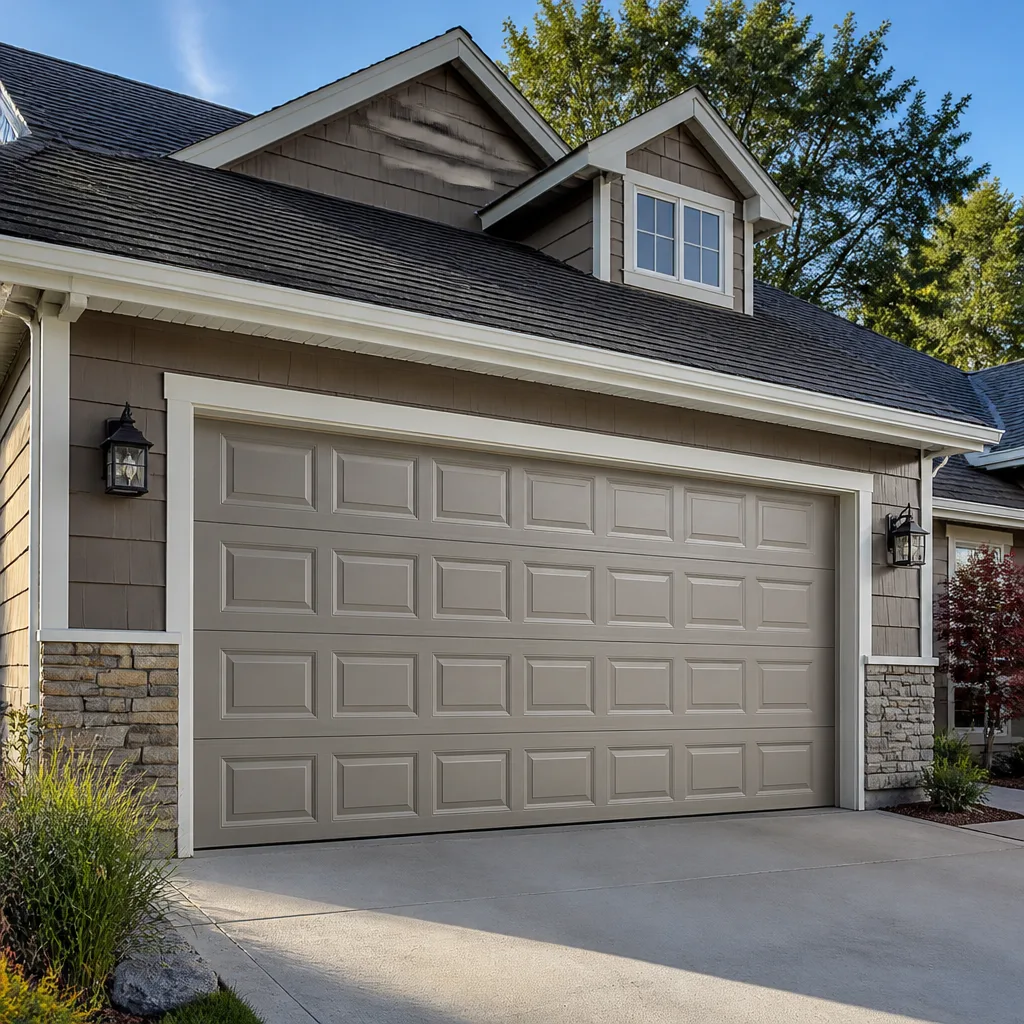 Raised-panel steel
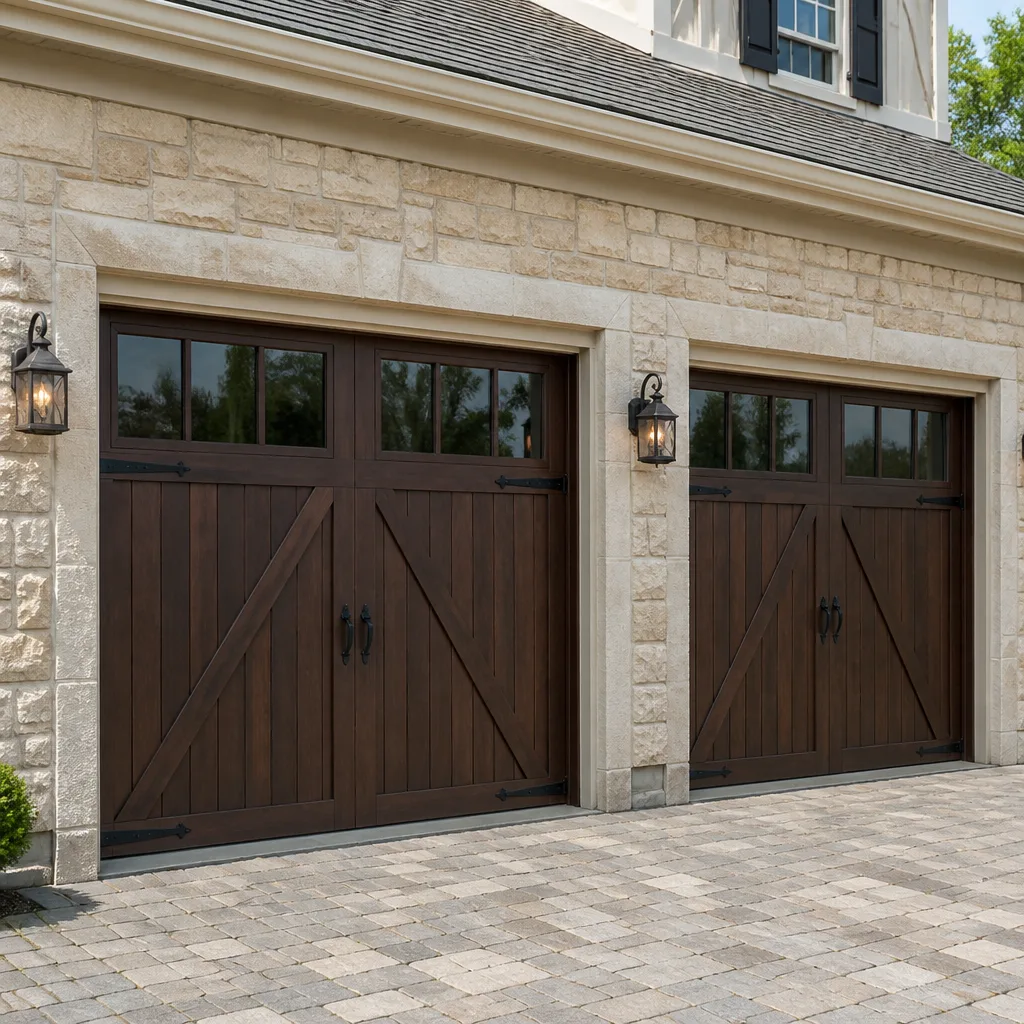 Carriage house
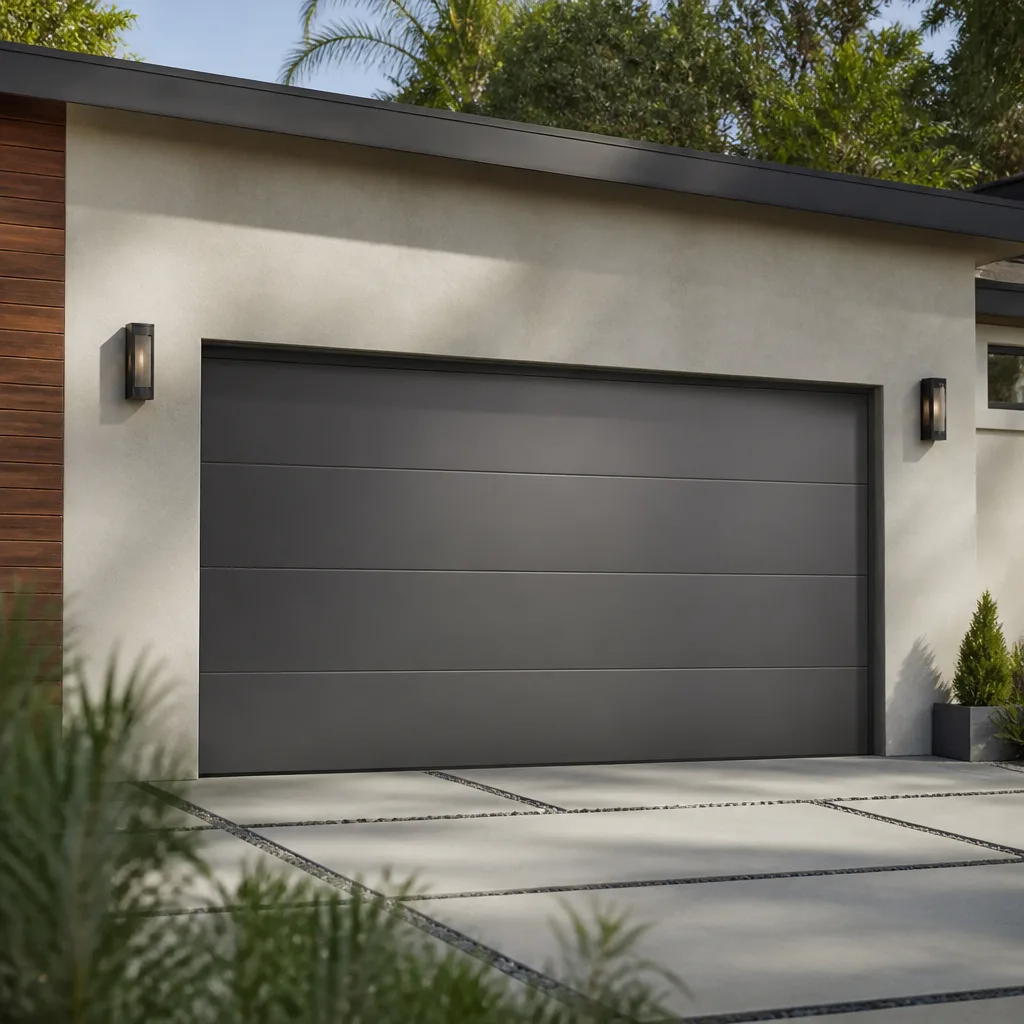 Modern flush
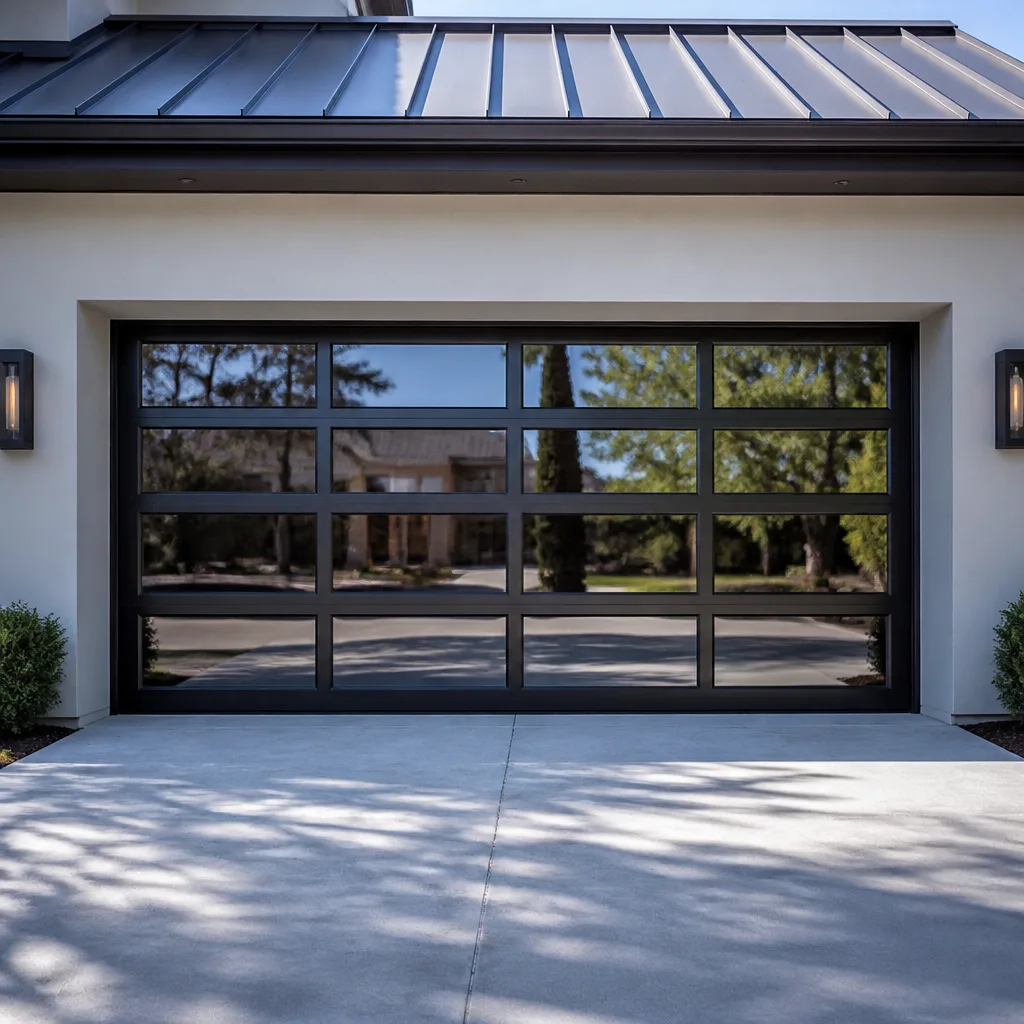 Full-view glass
 LiftMaster openers
 Chamberlain openers
Full 25-point door and opener safety check with every visit - springs, cables, rollers, tracks, and your LiftMaster or Chamberlain opener included
You get a price before we start. It does not change when the pro arrives.
Get your free estimateGarage Door Cost Breakdown: The Ironbound Homeowner’s Reference for 2026
The national average for a garage door replacement is close to meaningless in Ironbound. That figure is built from tract homes with standard 16-foot openings, big-box doors pulled off a rack, and labor priced at a national median. An Ironbound garage is a different animal. Many of the homes here were built before the war, which means you run into non-standard openings, tight alley approaches, brick-and-block facades that don’t accept a stock door frame, and hardware that’s been discontinued for years.
Each of those conditions shows up as a line item on your estimate, and most cost guides never mention it. This reference breaks down garage door pricing in Ironbound by the variables that actually move the number: opening dimensions, labor rates in the Newark and Essex County market, permit and inspection fees, the brand ecosystem already installed in your home, and whether you need scheduled work or emergency service. We’ll also walk through total cost of ownership over a decade so you can compare materials honestly. Read it before you sign anything.
Quick Answer
Garage door replacement in Ironbound, NJ typically runs $1,400 to $4,200 for a single door installed, depending on whether the opening is standard or needs fabrication, and whether you choose steel, aluminum, or a wood composite. Repair work is far cheaper: spring replacement is usually $180 to $340 per spring, opener repair sits around $150 to $420, and full opener replacement runs $450 to $1,100 installed. Non-standard openings common in pre-war Ironbound homes, Newark permit and inspection fees, and emergency call-outs each add to those numbers. Every price we quote is written, agreed, and locked before any technician touches the door.
Styles & brands we work with
- Raised-panel steel
- Carriage house
- Modern flush
- Full-view glass
- LiftMaster openers
- Chamberlain openers
Table of Contents
- How Opening Dimensions Drive Your Quote
- Labor Rates in Newark and Essex County vs. National Benchmarks
- Steel vs. Aluminum vs. Wood Composite: A 10-Year Cost Comparison
- Repair Costs by Component: Springs, Openers, Tracks, and Panels
- Emergency Service vs. Scheduled Work: When the Premium Is Justified
- Permit and Inspection Fees in Newark and How to Build Them Into a Quote
- The Brand Ecosystem Already in Your Ironbound Home
- Total Cost of Ownership: What Ten Years Really Costs
How Opening Dimensions Drive Your Quote
A standard single-car garage opening is 8 or 9 feet wide and 7 feet high. A standard double is 16 by 7. If your Ironbound opening matches, you’ll buy a factory-built door off the shelf and pay retail for it. If it doesn’t match, the door gets fabricated to your dimensions, and fabrication is where quotes start climbing.
Pre-war construction in Ironbound produces a lot of non-standard openings. Walk down any street in the East Ward and you’ll find garages squeezed into lots that were subdivided long before anyone standardized door sizes. Common variations we see:
- 8’6″ and 9’6″ widths, which require a made-to-order door or a re-framed opening.
- 6’6″ and 7’6″ heights, often from settled masonry or original brick lintels that limit headroom.
- Low headroom, which may require a low-headroom torsion setup or a different track configuration.
- Out-of-square openings, where the door has to be custom-fitted or the opening squared up first.
- Narrow alley approaches, which complicate delivery and can add to the labor side of the estimate.
Fabrication premiums are usually in the range of $300 to $900 over the standard-size price for the same door. Re-framing an opening is a separate charge and depends on what’s behind the trim. The point is to know your measurements before you call anyone. A tape measure and five minutes tells you whether you’re quoting a stock door or a custom one, and it keeps every estimate you receive on the same footing.
If you’re unsure whether the opening is salvageable or needs modification, a garage door installation consultation with measurements taken on site settles it. Take the measurements first, and the conversation is short.
Labor Rates in Newark and Essex County vs. National Benchmarks
Labor in the Newark and Essex County market runs higher than the national median for garage door work. That spread is not gouging; it’s the cost of operating a skilled trade in a dense urban market. There are specific reasons the labor line sits where it does in Ironbound:
- Dense streets and limited parking. A residential job in the East Ward can mean a block of walking with tools and a door on a hand truck. Time on site goes up.
- Older housing stock. Full brick and block facades, settled frames, and decades of original hardware mean more time diagnosing and fitting than on a newer suburban home.
- Permit coordination. Scheduling municipal inspections takes time and coordination, and that overhead is folded into a job that requires permits.
- Hazardous material handling. Old doors sometimes carry springs or cables that have been partially repaired or are non-standard, which means slower, more careful removal.
- Trade scarcity. Skilled garage door technicians are less plentiful in the urban core, and market rates reflect that.
Practically speaking, expect labor to account for roughly 35-45% of a full installation quote in this market, versus a lower share nationally. For repair work, most repairs are billed at a flat rate by the job rather than hourly, so the labor component is baked into the quoted price. Ask for that breakdown on any estimate. A reputable company will tell you labor from material without hesitation, and the written estimate should reflect both.
When you receive multiple quotes, don’t just compare bottoms. Compare what’s in the labor line: disposal of the old door, haul-away, trim, weather sealing, and whether the quote covers tuning the opener or just installing the door.
Steel vs. Aluminum vs. Wood Composite: A 10-Year Cost Comparison
Upfront price tells you almost nothing about which door costs you less. Over ten years, the material that survives northern New Jersey’s humidity swings and freeze-thaw cycles with the least intervention wins. Summertime here is humid, and winter brings repeated freeze-thaw on the masonry, which is hard on anything that absorbs moisture.
Here’s how the three common options compare in an Ironbound context:
- Steel: The lowest upfront cost, roughly $900 to $1,800 installed for a standard single door. Steel is durable and holds up well in NJ humidity. The cost risk is rust at the bottom seal from standing water on old driveways, and denting. Expect to replace bottom sections or repaint within ten years if the door faces the weather. Lowest upfront, lowest ten-year total.
- Aluminum: Upfront around $1,400 to $2,600 installed. Light and rust-proof, which makes it a good choice where the door takes direct rain. The trade-off is less rigidity, so it dents more easily and doesn’t hold a heavy style well. Ten-year cost is low if you don’t mind the look, because there’s little to paint or rot.
- Wood composite: Upfront around $2,200 to $4,500 installed. Best appearance match for the pre-war framing common in Ironbound, and it resists rot far better than solid wood. The catch is that composite still needs periodic re-sealing, and moisture that gets behind it from a failing header or flashing can cost you more than the door itself. Highest upfront, highest ten-year total if seals aren’t maintained.
The conclusion for most Ironbound homes: steel wins on total cost, aluminum wins where weather exposure is high, and wood composite makes sense when the door is visible from the street and appearance matters more than twenty-year durability. If your opener is near the end of its life, factor in opener replacement alongside the door so you’re pricing the system as one project rather than two.
Repair Costs by Component: Springs, Openers, Tracks, and Panels
Repair is usually the smart financial choice, and it’s much cheaper than a replacement. Here’s what the common jobs cost in Ironbound as typical estimates:
| Repair | Typical Estimated Cost | Notes |
|---|---|---|
| Torsion spring replacement (one spring) | $180 – $340 | Matched pairs are usually replaced together; a pair costs about twice the single-spring figure |
| Extension spring replacement (one spring) | $160 – $280 | Pair pricing applies the same way |
| Cable replacement | $150 – $300 | Often done alongside spring work |
| Opener repair | $150 – $420 | Belt, chain, capacitor, gear, or control board |
| Full opener replacement (installed) | $450 – $1,100 | Depends on brand and smart-home features |
| Track realignment or repair | $180 – $380 | Includes roller and hinge inspection |
| Panel replacement (single) | $200 – $550 | Stock vs. fabricated affects the price |
| Weather seal / bottom seal | $100 – $240 | Recommended with any spring or panel job |
Springs deserve a paragraph of their own. They’re the most dangerous component on a garage door, and a failed torsion spring is the top reason a door stops moving entirely. A torsion spring is under extreme tension and holds the door’s full weight. If a spring or cable snaps, get away from the door and call a trained professional. Do not attempt to replace springs or cables yourself – the injury risk is real. Our technicians handle springs as standard work, and we specify a matched pair when it’s the right call for the door rather than replacing one spring and leaving the door unbalanced.
If your door is stuck or your opener has failed, that’s the moment to call for garage door opener repair before you keep hitting the remote. Repeated attempts on a door with a broken spring or a failing opener can cause a second failure. One call, one visit, one fixed problem.
Emergency Service vs. Scheduled Work: When the Premium Is Justified
Emergency service costs more because it’s priced for speed. When a door is stuck open at night, won’t close, or has a snapped spring and you can’t secure the house, the premium is justified. When it’s a paint match on a door you’re replacing anyway, it isn’t. The rule is simple: pay the emergency premium when the door is a security problem, a safety hazard, or blocking you from driving to work.
In Ironbound specifically, several situations are worth the urgency call:
- A door that won’t close. The house is exposed and yes, that’s a security problem. Call now.
- A snapped spring. The door is dead weight, and forcing it can bend panels or drop it hard. Call now, don’t force it.
- A door hanging off its tracks. Hazard to people and property. Call now.
- An opener that’s running but not moving the door. Likely a stripped gear or a disco issue; a repair visit usually handles it the same day.
What to expect from emergency pricing: it typically adds a call-out premium on top of the repair itself, and after-hours timing may add more. That’s not the same as gouging, and it should be quoted before work starts. We quote and agree the price before any work begins, including on emergency calls. Same door, same day where possible, and no surprise on the invoice.
If you’re pricing a new door and the current one still works, the smart path is to schedule it. Replacing a door is measured, ordered, and scheduled work, not same-day work, and there’s no reason to pay an emergency premium to get in a line. Call for a free measurement and a written price, and book the install when the door is ready.
Permit and Inspection Fees in Newark and How to Build Them Into a Quote
Replacing a garage door in Newark usually involves the building department, depending on the scope and whether structural work is included. Permit requirements vary by project and by what the city inspector wants to see, so the right move is always to confirm with the city’s building department before the work is scheduled. Say the word and we’ll tell you how to ask.
Here’s how to handle permits in a quote, step by step:
- Ask the estimator directly whether the scope requires a permit. Full replacement usually does; a repair usually doesn’t.
- Confirm whether permit and inspection fees are in the quote or billed separately. Get it in writing so there’s no surprise later.
- Ask who’s pulling the permit. The homeowner can pull it, or the installer can; the quote should say which.
- Ask how the inspection is scheduled and whether re-inspection fees are covered. Most inspections pass the first time, but treat a second visit as a separate line item and budget for it.
- Line up the inspectable scope before you sign. Header replacement, reframing, and new anchoring all add scope and inspection time; get them on the quote if they apply to your opening.
Permit and inspection fees themselves are modest in the scheme of a full replacement, but the planning overhead is real. On a Newark job, build in permit fees and the inspection visit before you assume the quoted door price is your all-in number. A written estimate that separates door, labor, disposal, and permit fees is the only kind worth signing.
The Brand Ecosystem Already in Your Ironbound Home
The door and opener already installed in your house determines a lot about your quote. Ironbound has a range of equipment from older homes, and knowing the brand tells you how easy it’ll be to source parts and whether a same-day fix is realistic. We work on the major brands, and that includes the older equipment common to homes here.
Opener brands in particular matter. A LiftMaster or Craftsman unit is widely supported, and most repairs or replacements can be done cleanly. A Wayne Dalton door usually has known part numbers, which saves diagnostic time. A Raynor door from an older installation may use components that need to be verified before a repair is attempted. The older and rarer the unit, the more likely the repair becomes a replacement, and the quote should reflect that honestly.
We’re familiar with LiftMaster, Chamberlain, Genie, Clopay, Amarr, Wayne Dalton, Craftsman, and Raynor, which means we can diagnose brand-specific failure modes faster and source the correct part the first time. That saves a return visit. It also means we won’t quote you a replacement because we couldn’t identify the part – we’ll tell you what’s wrong and what it costs to fix.
If your door has any age on it, get the make and model into the conversation early. It’s the difference between a quote that holds and one that shifts once the truck is on site. Our technicians have up to 9 years of experience across these brands, and a garage door repair call is usually the fastest way to know whether you’re looking at a repair or a replacement.
Total Cost of Ownership: What Ten Years Really Costs
The upfront price is one number; the ten-year total is the one that matters. Here’s a realistic view of what each material costs to own across a decade in northern New Jersey’s humidity and freeze-thaw cycles:
- Steel door: Upfront $900 – $1,800. Ten-year maintenance: repaint or touch-up bottom sections every few years, bottom seal replacement once or twice. Expect minimal repair beyond a cable or roller. Ten-year total: roughly $1,200 – $2,400, plus routine opener maintenance.
- Aluminum door: Upfront $1,400 – $2,600. Maintenance light. Risk is denting, not rust. Ten-year total: roughly $1,600 – $3,000. Lowest maintenance, but styling is limited.
- Wood composite door: Upfront $2,200 – $4,500. Requires re-sealing every two to three years and inspection for moisture behind the seal. Ten-year total: roughly $3,000 – $6,000 if seals are maintained; higher if they aren’t.
Two other costs sit under the ten-year total regardless of material: the opener and the springs. An opener at the end of its life is a $450 – $1,100 replacement. Springs typically cycle out within ten years under daily use and run $180 – $340 per spring, with a paired replacement costing about twice that. A ten-year plan that ignores these two is not a plan.
If you’re planning a new door, factor in the opener and a spring service to the project budget rather than treating them as a later surprise. Bundle the conversation, not necessarily the price.
Common Mistakes to Avoid
- Comparing bottom-line quotes without comparing scope. One quote may exclude disposal, trim, or opener tuning while another includes it. Compare what’s inside the number, not just the number.
- Signing a verbal estimate. If it isn’t written and agreed before work starts, it’s not a price. Get the written estimate and read it line by line.
- Assuming a national average applies to your pre-war opening. Ironbound homes routinely have non-standard openings. Measure before you budget and don’t let a national figure anchor your expectation.
- Forgetting permits on a Newark replacement. Skipping the building department conversation can cost you an inspection fee and, worse, a problem at resale. Confirm with the city before signing.
- Replacing one spring on a matched pair. A single spring carries unbalanced load on the door and shortens the life of the pair. It’s cheaper now, more expensive later.
- DIY spring or cable work. Springs are under extreme tension and a DIY failure is a serious injury risk. This is the one job to always hand to a trained professional.
- Paying an emergency premium for a scheduled job. If the door still works and the house is secure, book the install and skip the call-out fee.
See the difference
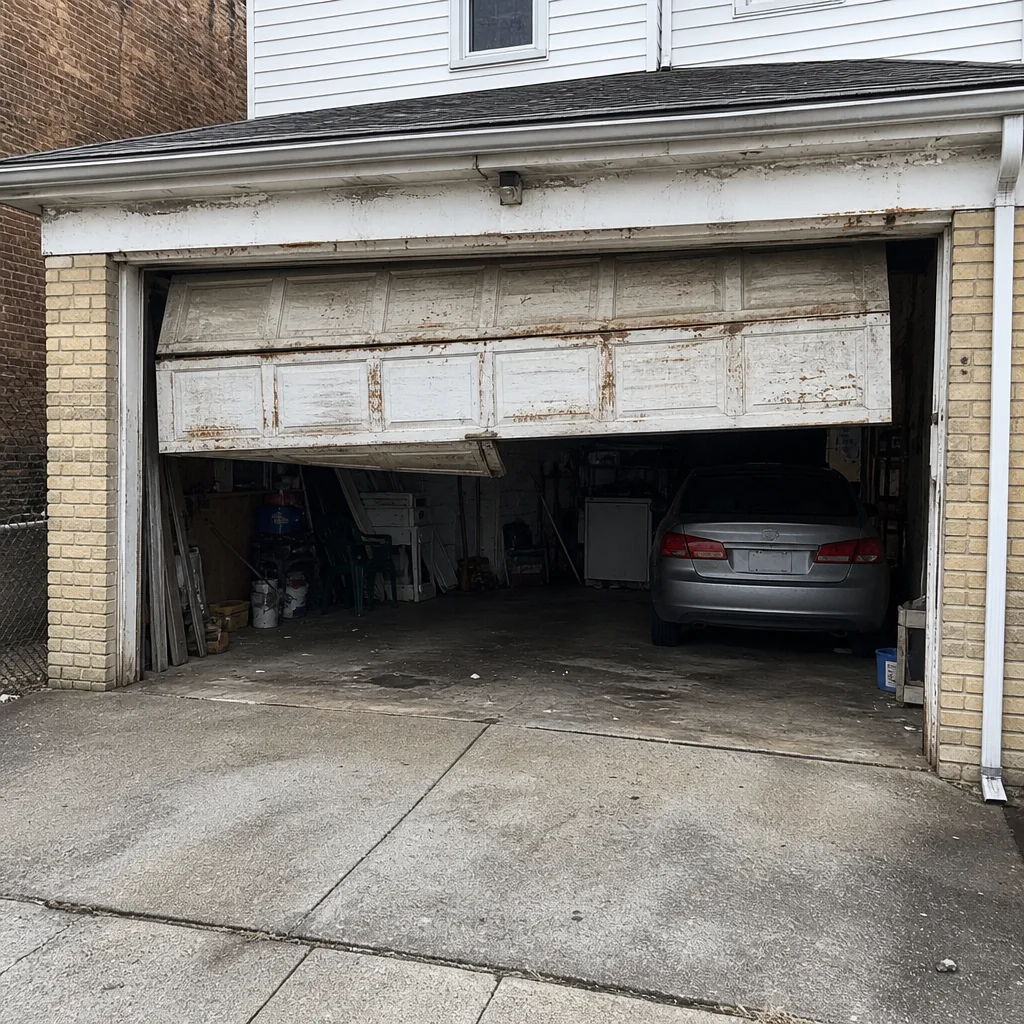 Before
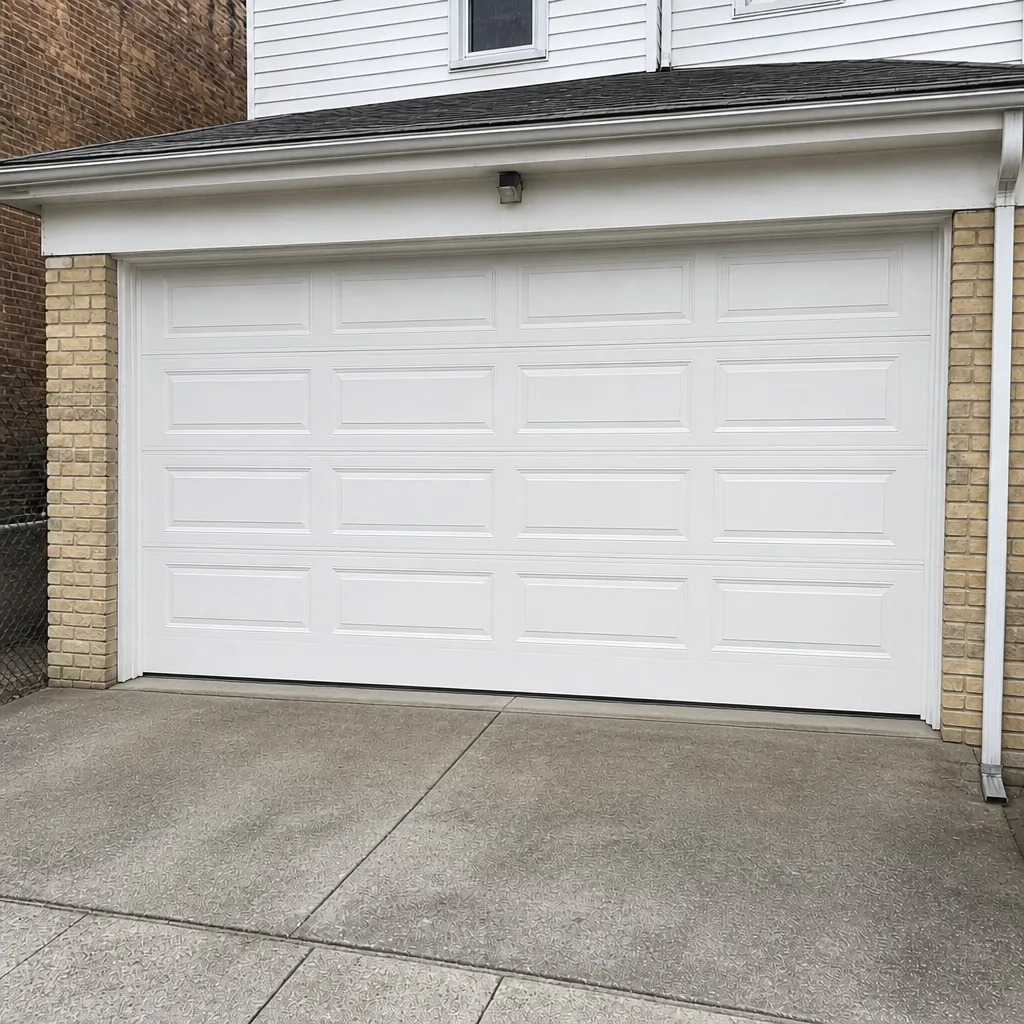 After
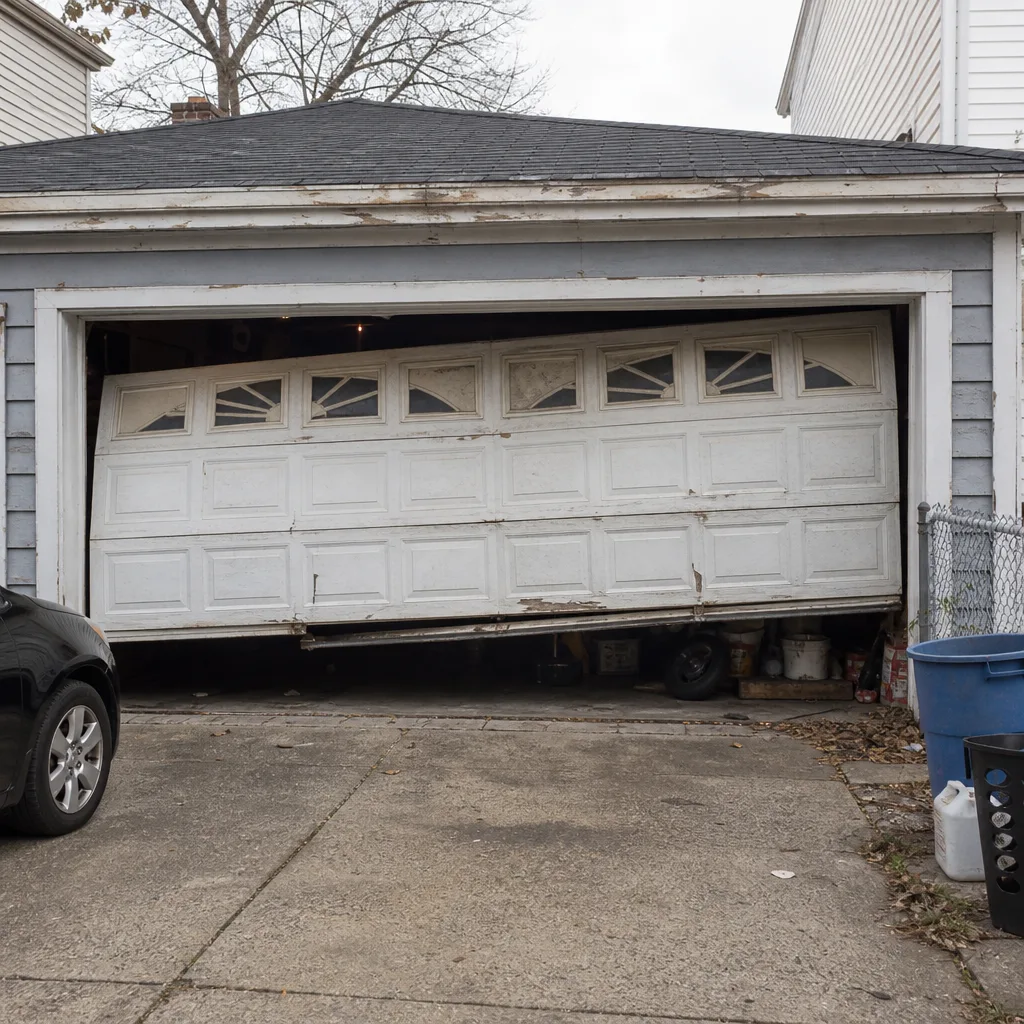 Before
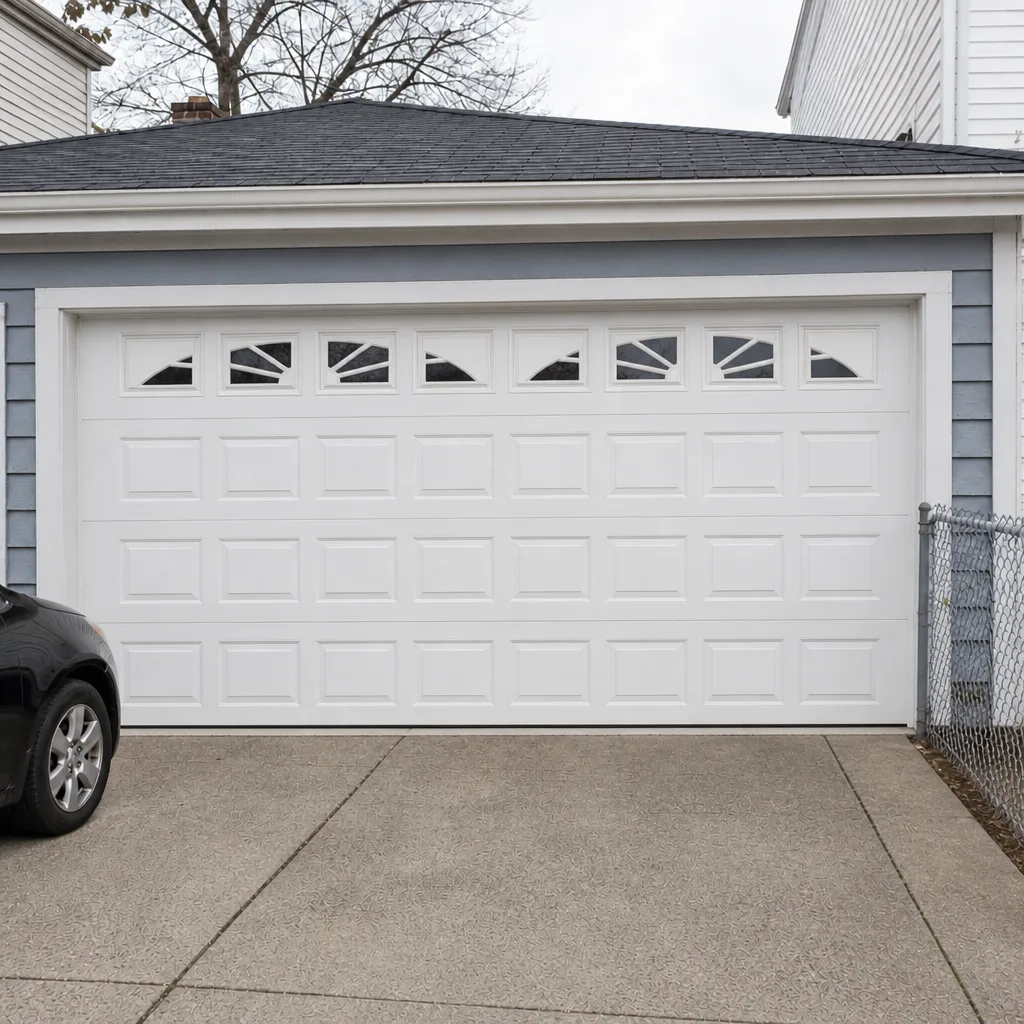 After
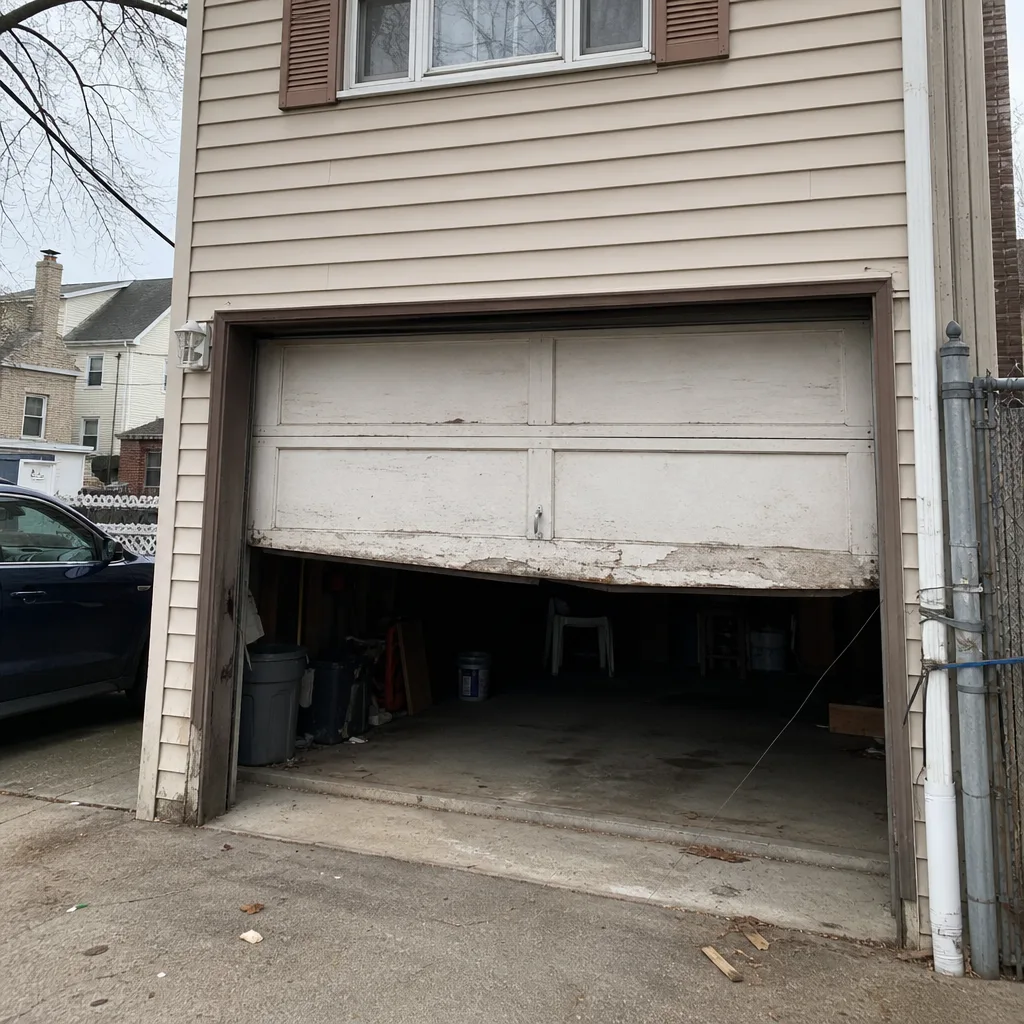 Before
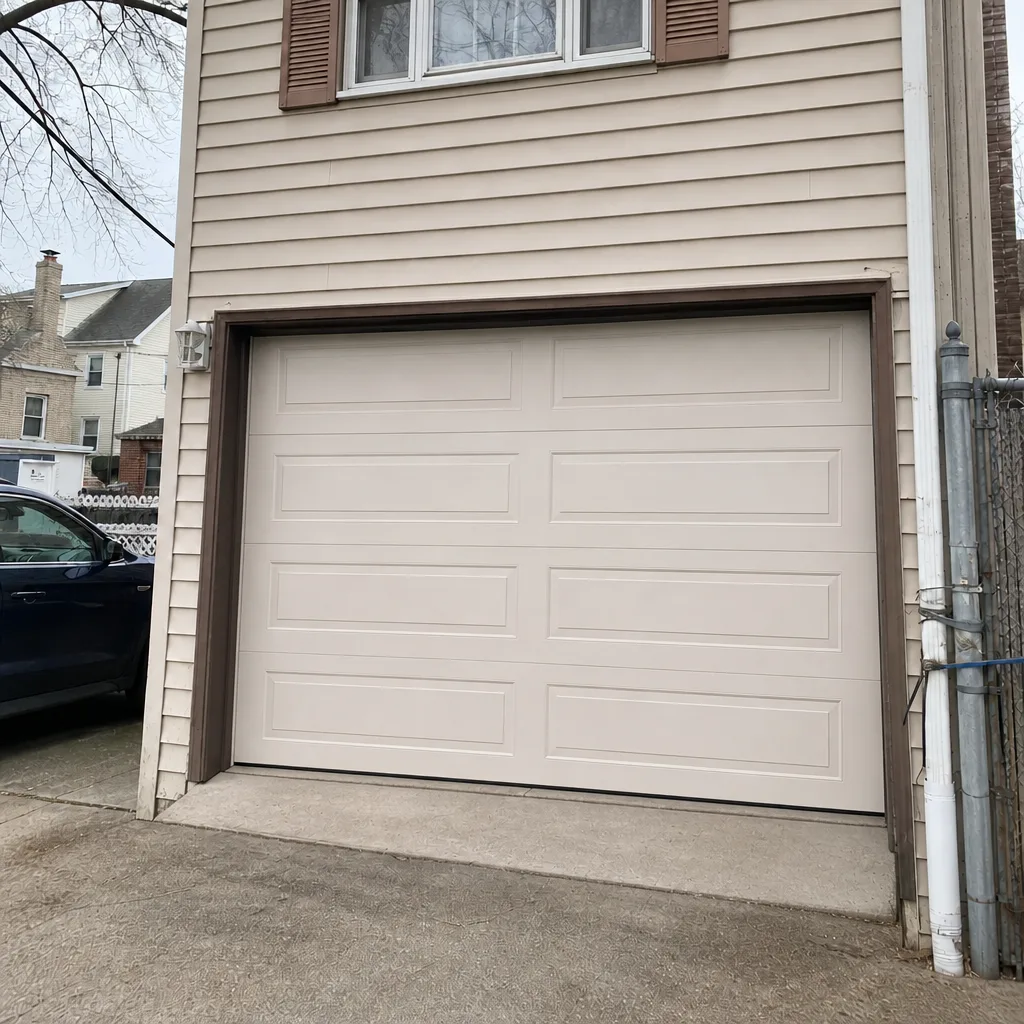 After
When to Call a Professional
Call a professional when the door won’t close and the house is exposed, when a spring has snapped or the door is hanging off its tracks, when the opener runs but doesn’t move the door, or when the door is new to you and you don’t know its history. Don’t call for a quote to replace a working door until you’ve measured the opening and know whether it’s standard. Garage Door Repair Ironbound offers free estimates in Ironbound – call (855) 337-1035. We offer emergency garage door service as a named, real service, not a vague promise, so if the door is a security problem right now, call and we’ll take it from there. Our technicians handle springs, openers, and full installations from a single company, so you won’t need a second vendor.
Frequently Asked Questions
Garage door replacement in Ironbound typically costs $1,400 to $4,200 for a single door installed, depending on whether the opening is standard, the material you choose, and whether permits apply. Non-standard pre-war openings and Newark permit and inspection fees add to that range. The written estimate sets the final price. Call (855) 337-1035 for an exact quote – estimates are free.
No – the price is quoted and agreed before any work starts, including on emergency calls. What can change the price is new scope you approve, like a reframe or a damaged panel discovered during removal, and we’ll tell you before we proceed. Call (855) 337-1035 for an exact quote – estimates are free.
A single torsion spring repair in Ironbound typically runs $180 to $340, and a matched pair costs about twice that because we recommend replacing springs as a pair. Cables, if they’re involved, add $150 to $300. Call (855) 337-1035 for an exact quote – estimates are free.
The local professional we connect you with is licensed and insured as their state requires, and we’ll confirm it for you before work begins. Our technicians have up to 9 years of experience across the major door and opener brands. Call (855) 337-1035 for an exact quote – estimates are free.
For repair and emergency work, yes – same-door, same-day service is available in Ironbound for many jobs because emergency coverage is a named service. A new door installation is different: it’s measured, ordered, and scheduled, so you get a free measurement and a written price rather than a same-day install. Call (855) 337-1035 and tell us what the door is doing.
That depends on the scope of the work, so confirm with the city’s building department before scheduling, especially if the job includes structural changes or reframing. Permit and inspection fees should be a line item on your written estimate. Call (855) 337-1035 for an exact quote – estimates are free.
The Bottom Line
Cost in Ironbound is a function of conditions, not national averages. A pre-war opening drives fabrication premiums, Newark and Essex County labor rates sit above the national median for real reasons, and permits add planning overhead you should build in before signing. Repairs are usually the cheaper call, springs are the dangerous one to leave to chance, and material choice should be judged on the ten-year total rather than the sale price. Get a written estimate, compare scope line by line, and stop tripping the opener before the second failure. If the door is a security problem right now, keep reading in a moment – call us instead.
When you’re ready for a free estimate on garage door repair, opener service, or a full installation in Ironbound, call (855) 337-1035. We quote before we work, we work on your brand, and we’ll tell you honestly if you don’t need a replacement yet.
Written by the team at Garage Door Repair Ironbound.