Last updated November 21, 2026
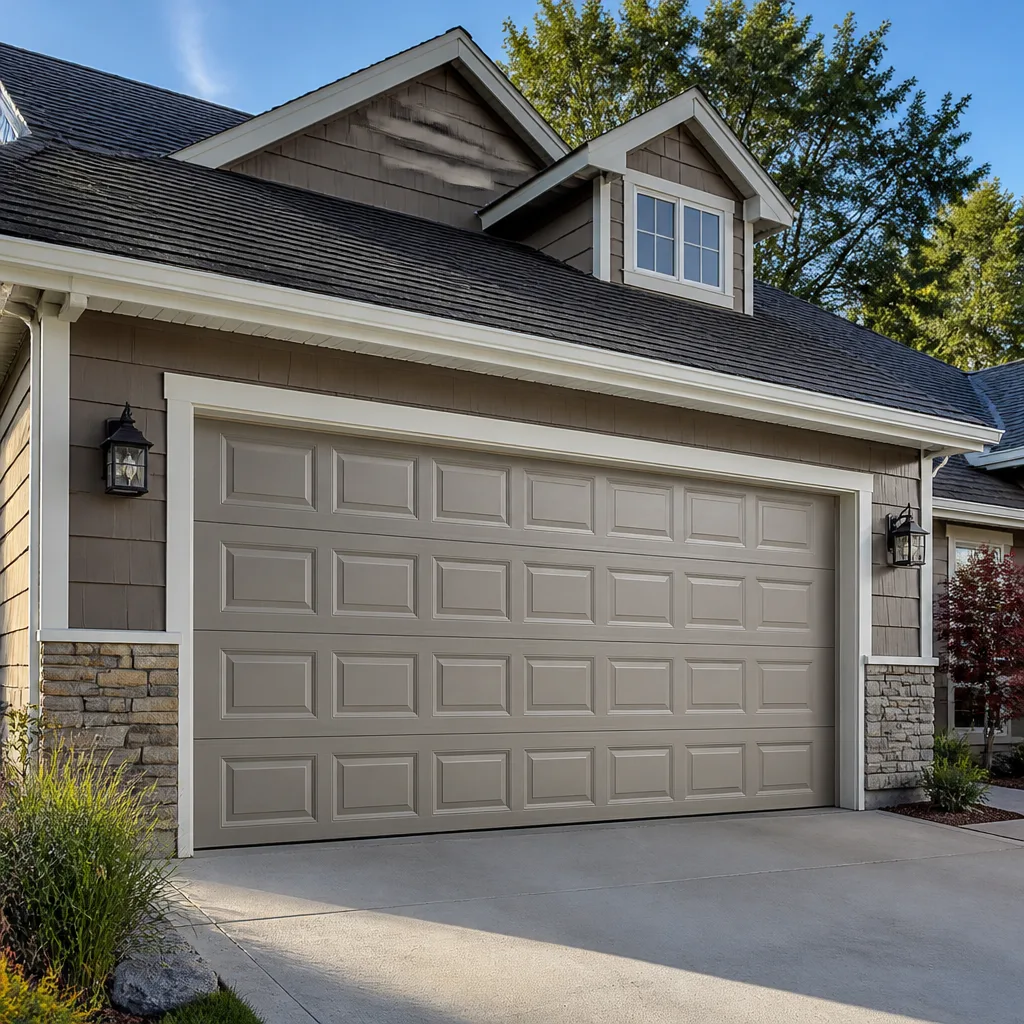 Raised-panel steel
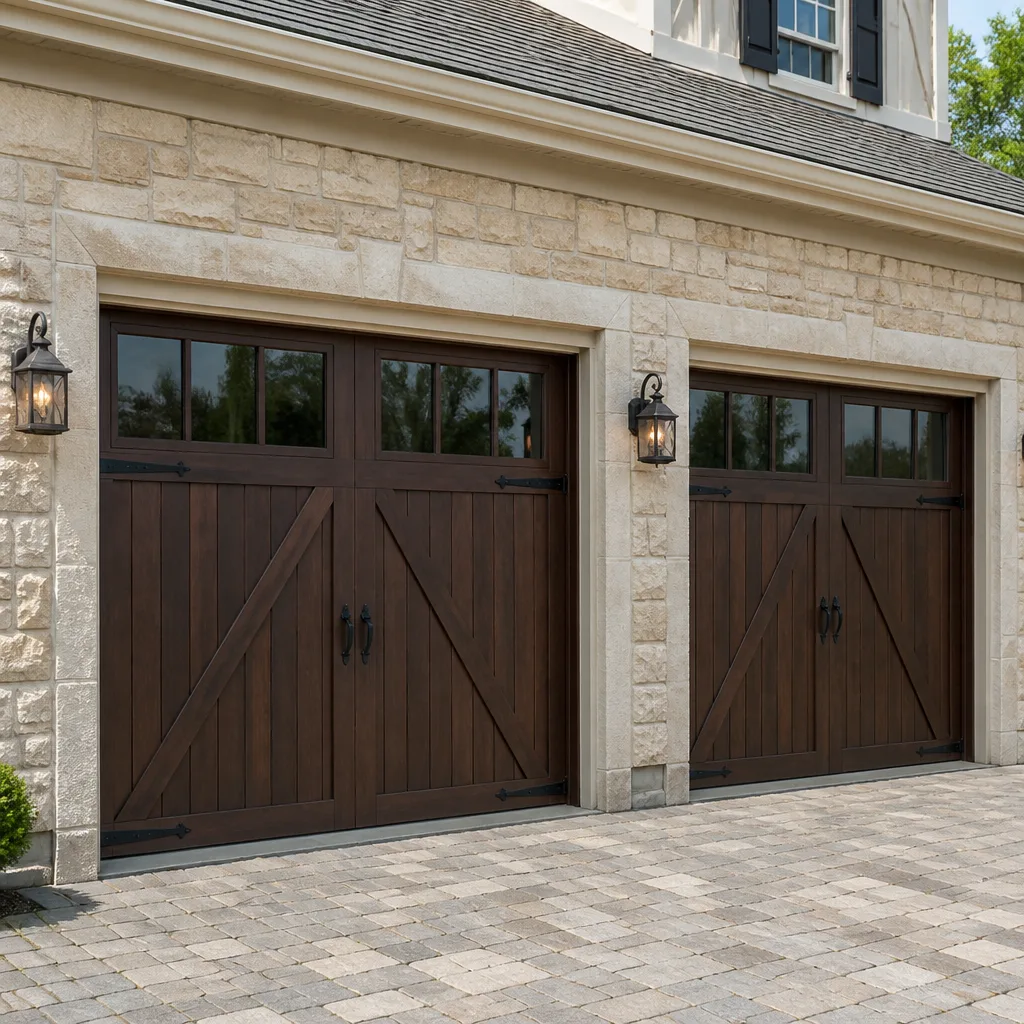 Carriage house
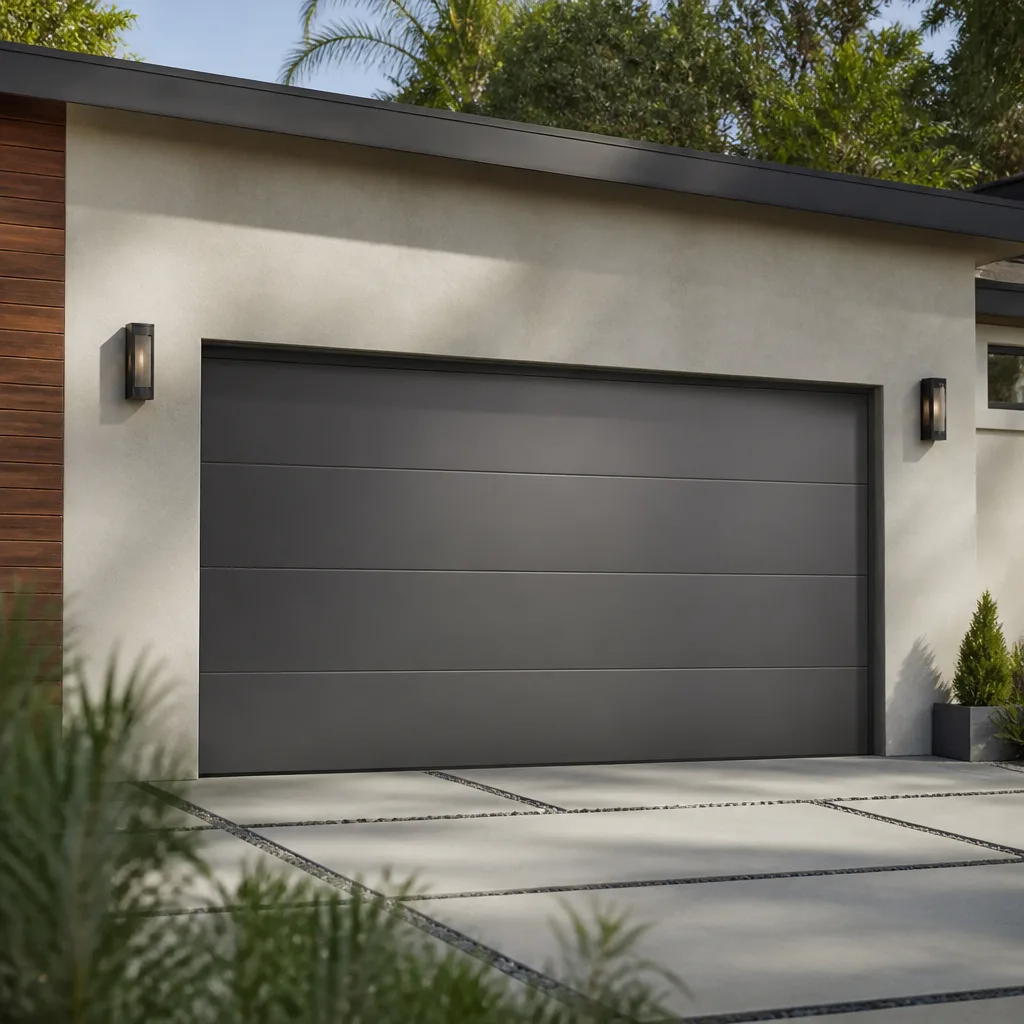 Modern flush
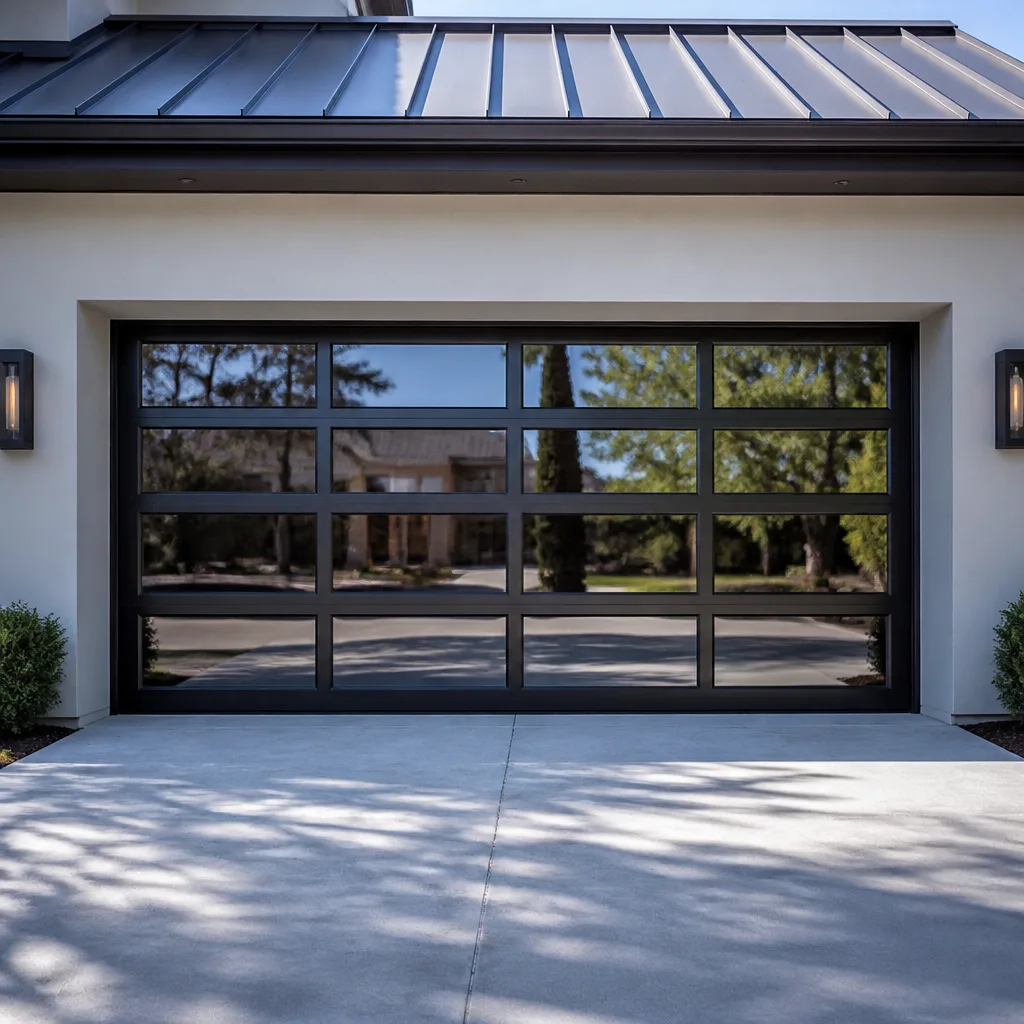 Full-view glass
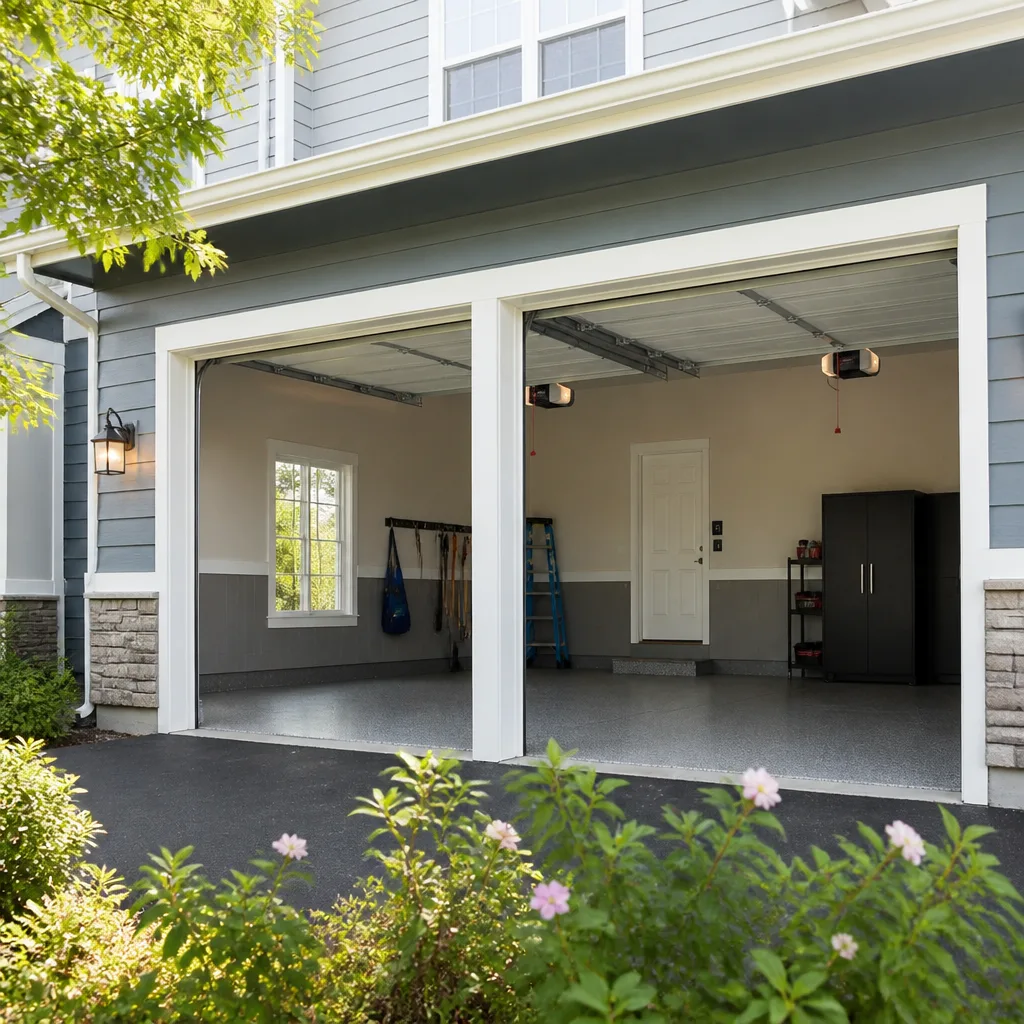 LiftMaster openers
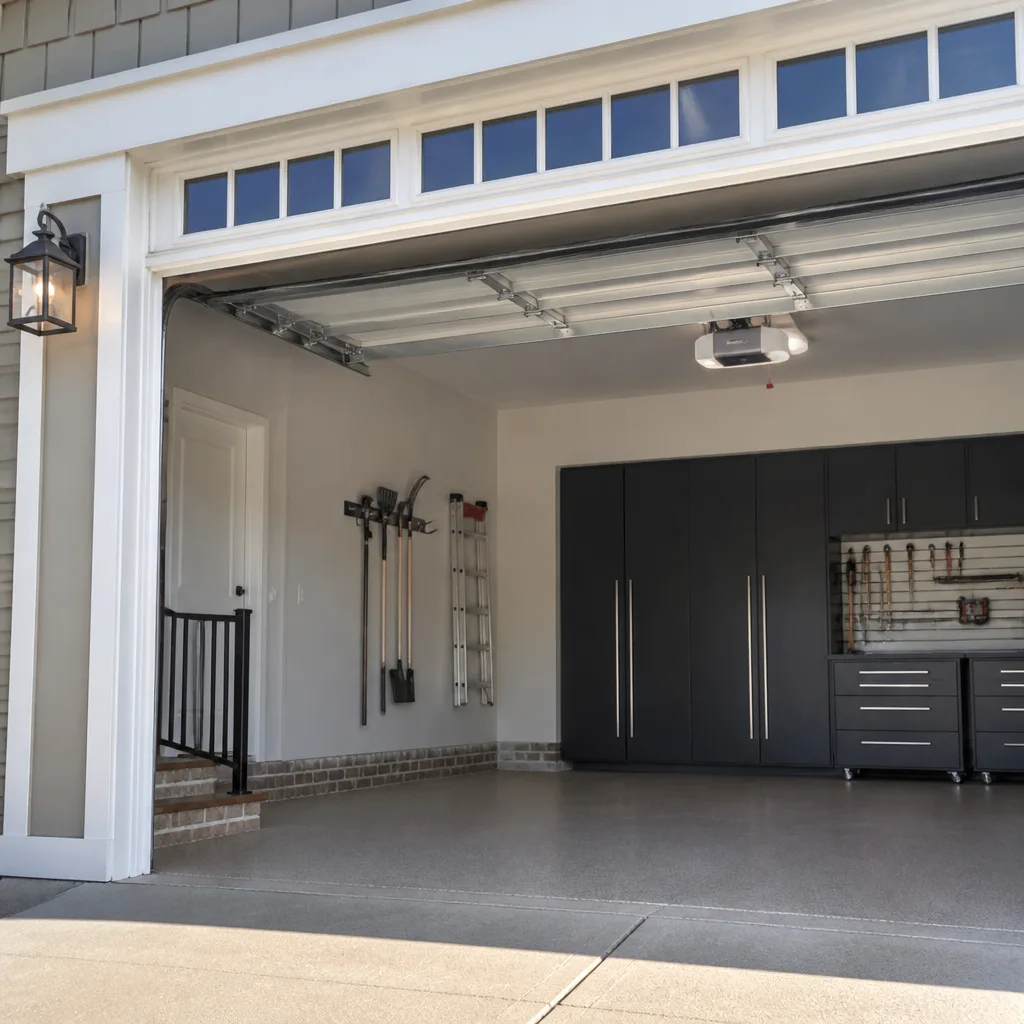 Chamberlain openers
Full 25-point door and opener safety check with every visit - springs, cables, rollers, tracks, and your LiftMaster or Chamberlain opener included
You get a price before we start. It does not change when the pro arrives.
Get your free estimateGarage Door Warning Signs: An Ironbound Homeowner’s Reference Guide
A door that takes three seconds longer to close than it did six months ago isn’t “getting old.” It’s telling you exactly which component is degrading, if you know how to read it. Most garage door guides wait until the door won’t open at all. This one doesn’t. We wrote it for the point where the door still works, just not quite right: the uneven close, the new grind, the gap you didn’t notice last winter. Here in Ironbound, where a lot of housing stock dates back decades and detached garages sit behind narrow alleys off Ferry Street and Market Street, those early signals are easy to hear and hard to interpret. This reference guide walks you through what each one means, how urgent it is, and what to do next. By the end you’ll be able to tell the difference between cosmetic wear and a spring that’s about to fail.
Quick Answer
The most common garage door warning signs in Ironbound NJ are: uneven closing speed or a door that closes crooked, new grinding or squeaking sounds, an opener that reverses without a visible obstruction, and visible gaps under the closed door. Most of these appear two to six weeks before a frank failure. Rust on springs or cables and any visible fray in a cable are urgent – stop using the door and call a technician. For everything else, book a diagnostic. Garage Door Repair Ironbound offers free estimates in Ironbound – call (855) 337-1035.
Styles & brands we work with
- Raised-panel steel
- Carriage house
- Modern flush
- Full-view glass
- LiftMaster openers
- Chamberlain openers
Table of Contents
- Uneven Closing Speed: What It Tells You About Cables vs. Springs
- Grinding vs. Squeaking vs. Rattling: Decoding Each Sound
- Why Your Opener Reverses for No Apparent Reason
- Reading the Gap Under Your Closed Door
- Rust Patterns: Cosmetic Oxidation vs. Structural Corrosion
- Opener Warning Signs Across Brands
- Ironbound Weather and Its Effect on Your Door
- The Two-to-Six-Week Degradation Timeline
Uneven Closing Speed: What It Tells You About Cables vs. Springs
When one side of the door reaches the ground before the other, or when the door visibly twists in the opening as it descends, you have a balance problem. There are only two mechanisms that keep a door level: the torsion or extension springs, which share the door’s weight, and the lift cables, which pull both sides up at the same rate. When the door runs crooked, one of those has started to fail. Which one tells you a great deal about urgency.
An uneven close caused by cable tension usually shows up as a sudden change. One day the door is fine; the next it’s noticeably crooked. That pattern points to a cable that has slipped off a drum, jumped a roller, or stretched. It can progress to a full snap within days. Springs, by contrast, degrade more slowly. A torsion spring that’s losing tension lets the door sag on one side gradually over weeks. You’ll notice the door no longer sits flush, then that it hesitates when you hit the opener, then that it drops faster than usual on the way down.
Both mechanisms are under heavy load. Whatever the cause, we don’t recommend running the door to “see if it fixes itself” once you’ve spotted a crooked close. Cables can snap with enough force to damage the door panel and put anyone nearby at risk. This is exactly the kind of job our team treats as a specialty, and why garage door repair on a crooked-running door starts with a controlled diagnostic rather than a running test.
What you can check without tools: with the opener disconnected (the manual release cord), the door should lift by hand with light pressure from a fully closed position. If it feels heavy on one side, or you have to shoulder into it, the balance is off. Stop there and call a technician with garage door spring expertise.
How to Describe an Uneven Door on the Phone
- Note which side reaches the ground first (the alley side or the wall side, standing inside the garage looking out).
- Note whether the change was sudden (yesterday to today) or gradual (over weeks).
- Check whether the bottom panel still touches on both corners when fully closed.
- Listen for any new sound during the uneven close – the sound often identifies the failed component.
Grinding vs. Squeaking vs. Rattling: Decoding Each Sound
Every garage door makes noise. The trick isn’t whether it’s loud – it’s whether the noise is new, how heavy it is, and where it comes from. In our experience, three sounds account for most “should I worry about this?” calls, and each maps to a different component with a different urgency level.
Grinding
Grinding is metal-on-metal and it’s the most urgent of the three. It usually comes from one of three places: worn rollers binding in the track, a torsion spring that’s starting to bind inside the drum, or a bent or dented track forcing the rollers off their line. Grinding that starts suddenly after the door has been fine should be treated as a same-day call. If the door also starts to run unevenly, the two symptoms together point strongly at the spring or the cable system. Stop using it.
Squeaking
Squeaking is usually the least urgent. Most often it’s dry rollers, dry hinges, or dry torsion tubes. Left alone it gets worse, and eventually the squeaking joins with symptoms of an actual imbalance. But a squeaking door alone is a maintenance issue, not a failure in progress. Note that some garage door noises increase after long, humid stretches in the summer – Ironbound gets plenty – because lubricant thins out and dry metal gets louder.
Rattling
Rattling is the sound of loose hardware. Hinge bolts, carriage bolts, and the bracket points can work themselves loose over years. It’s almost never urgent on its own, but it’s a reliable early indicator that the door’s hardware is doing extra work absorbing vibration it shouldn’t be absorbing. Left unchecked, that vibration wears out the tracks and the rollers faster than they’d otherwise wear. A technician tightening bolts is a twenty-minute visit.
What “Normal” Noise Sounds Like
- Standard open and close: a steady hum from the opener, a low whir from the springs, some dull panel noise as the door folds back.
- Standard close: a single soft thump when the door meets the ground.
- Standard open: a brief pause. The opener should not have to “pull hard” at any point.
- Not normal: crunching, snapping, a repeated clunk at the same point every cycle, or a noticeably louder door than a year ago.
Why Your Opener Reverses for No Apparent Reason
An opener that stops and reverses on the way down, without anything under the door, is almost always a safety sensor problem. Not the opener itself. The photoelectric sensors mounted six inches off the floor at each side of the opening fire a light beam across the threshold – if the beam is broken, the opener reverses within a second or so of detecting it. False reverses mean the opener thinks the beam is broken even when it isn’t.
Common causes, in the order we check them:
- Sensor misalignment. The small LED on each sensor should be solid. If one blinks or is dark, the two sensors aren’t “seeing” each other. A bump from a garbage can or a shovel handle in the alley is the most common cause we see in Ironbound.
- Dirty lenses. Spiderwebs, dust, and pollen all block the beam. Wipe with a soft cloth.
- Sunlight interference. Low sun directly hitting the sensor lens can overwhelm the beam. This usually only causes issues at certain times of day.
- Obstruction between sensors. A broom handle leaning in the door’s path, a rolled-up rug, or a single bag of rock salt will all cause a reverse.
- Sensor wiring damage. Rodents and lawn tools are known to chew or nick the low-voltage wire that runs down each side of the frame.
If the sensors are clean, aligned, and their LEDs are solid, and the door still reverses, the problem is inside the opener’s logic board or limit settings. That’s where brand-specific diagnostic knowledge matters – a Chamberlain or LiftMaster logic board behaves differently from a Genie or a Craftsman when limit settings drift. Our team handles garage door opener repair across all of these, and diagnoses the cause first rather than swapping parts. For more on the opener side of the equation, that page covers motor, logic board, and remote-sync issues in detail.
One safety note: an opener that reverses occasionally might be a sensor issue, and a sensor issue is self-limiting. But a door that reverses because the opener’s force setting has been turned up to compensate for a heavy door is a different story. That’s a sign the springs are failing and the opener is working overtime. If reverses started suddenly and are accompanied by the door feeling heavier, treat it as a spring call, not an opener call.
Reading the Gap Under Your Closed Door
A closed garage door should touch the ground evenly along its full width, with the bottom seal compressed but not flattened. If you can see daylight under the door when it’s fully down, the shape of that gap tells you what’s wrong. It’s one of the cheapest diagnostics we know, and Ironbound homeowners can do it with a flashlight on a clear afternoon.
Even, thin gap along the entire bottom
Usually just a worn or missing bottom seal. Cosmetic and cheap to replace, but don’t skip it – an even gap lets in water, pests, and cold air, and over years expands into a more expensive problem with the door’s framing.
Gap at one corner, close at the other
This is a leveling problem. The door is not square in the opening, either because the tracks on one side have shifted or because the springs aren’t pulling evenly. If the gap appeared gradually, suspect the spring side. If it appeared suddenly, check for a bent track.
Center gap, corners tight
A center gap usually means the bottom panel is bowing, most often from a worn bottom bracket or a bottom panel that’s been forced. It can also mean the door is too wide for the frame after years of settling. Both are correctable, but the fix depends on which is happening.
Diagonal gap
A diagonal gap – wide at one corner and wide at the opposite corner, with the other two corners tight – is the classic signature of a foundation or floor settling problem underneath the garage. In a lot of older Ironbound properties, especially ones with detached garages in the alley, the slab has moved more than the door frame. This is a real diagnosis situation, not something to fix by cranking the bottom bracket.
Wide gap that appears only on one side when the door is closing
That’s a track alignment issue. The door is tracking to one side as it descends. Left alone, the door eventually rides out of the track and comes down crooked or falls. This is one of the fastest degradations we see. Call before the door actually binds.
Rust Patterns: Cosmetic Oxidation vs. Structural Corrosion
Rust on a garage door can mean two wildly different things. On the painted panels, small surface rust is oxidation and it’s cosmetic. On the springs, cables, and track hardware, rust signals that the metal itself is being weakened – and that’s a very different problem. Knowing which is which prevents expensive replacements and, in the same breath, prevents ignoring a real hazard.
Cosmetic rust (not urgent)
- Orange surface rust on the lower panel edges of steel doors.
- Small rust spots around the panel rivets and stamped trim.
- Light rust around hinges and the lift handle.
- Any rust on the painted face of the door.
This rust can be sanded, spot-primed, and repainted. Left alone it eventually causes a paint failure and a repair, but it’s not a safety issue.
Structural corrosion (urgent)
- Rust that runs in a continuous stripe along a torsion spring – especially if it’s flaking or pitted.
- Rust on the lift cables themselves, or any cable that shows a fray, kink, or broken strand.
- Rust that has eaten into the inside of the track, not just the face.
- Rust on the bottom brackets and bearing plates.
A rusted torsion spring can fail with no warning at all. A rounded-off or corroded spring wire loses elasticity unevenly and snaps as a stress fracture. A frayed cable is even more dangerous – it can release under load. If you see rust stripes on the springs, or any visible damage to the cables, do not run the door and call a technician. Garage door spring repair is genuinely the most mechanically hazardous job in this trade, and it’s why our team handles it as a standard service with proper spring containment and door restraints. If you’d like the deeper technical walkthrough on spring anatomy, we cover it on our Ironbound page.
Opener Warning Signs Across Brands
The opener is usually the first component homeowners blame and the last one actually failing. Most “my opener is broken” calls we get in Ironbound turn out to be a door problem the opener is complaining about. Here are the signals that point back at the opener itself.
Things an opener tells you about a failing door
- Reverses on the way down without obstruction: safety sensor or force setting.
- Door stops halfway up: door balance issue far more often than motor failure. Spring diagnosis first.
- Motor runs but door doesn’t move: stripped gear, snapped lift cable, or a broken torsion spring.
- Door opens, won’t close: sensor problem, limit switch drift, or both.
Each of these is diagnosed with the door disconnected from the opener. If the door opens and closes by hand easily but the opener still misbehaves, the fault is in the opener. If the door is hard to move by hand, the opener is telling you the truth.
Things that point at the opener itself
- Remote works intermittently or only from close range: battery or antenna issue.
- Opener runs but door doesn’t: drive gear or belt.
- Opener clicks but doesn’t run: capacitor or logic board.
- Opener beeps and reverses immediately: sensor test or limit switch issue.
- Smart-home app shows offline, remote still works: Wi-Fi module in the opener brain, not the door.
Older Craftsman and Wayne Dalton units have a couple of specific failure modes we see often – clicking without action usually points at the capacitor, and a slow down-shift in opener speed before failure is often a sign the drive gear is failing. Newer Chamberlain and LiftMaster units with Wi-Fi modules have a different set of failure modes around the app connectivity, though the mechanical opening and closing behavior is unaffected. We service both legacy and smart-home-compatible openers, which is why brand-specific diagnosis saves visits. On door brands, we’re factory-familiar with Amarr, Clopay, and Raynor hardware patterns as well – useful when you’re working out whether the opener or the door panel is the real cause.
Ironbound Weather and Its Effect on Your Door
Ironbound sees it all: humid summers that swell wood components and dry out lubricants, freezing winters that stiffen steel rollers and shrink the bottom seal, and enough spring rain to reveal any gap under the door you didn’t know you had. Weather isn’t a warning sign in itself, but it accelerates the ones you’d otherwise notice slowly.
Three seasonal patterns worth planning around:
- Late spring and early summer: the humid air of an Ironbound summer softens grease on torsion tubes. Squeaking that appears in June is often just a lubrication issue; the door is otherwise fine. Fix the squeak and you’ll hear the next problem earlier.
- First freeze: a bottom seal that was borderline all year can crack within a week of the first hard frost. You’ll see a wider gap, then a draft, then water intrusion. Seals are cheap; frame damage isn’t.
- Early spring thaw: foundations in older Ironbound garages move with the freeze-thaw cycle. A door that closed flat all winter may develop a diagonal gap in April. That’s not the door failing – that’s the slab moving underneath it. The fix is adjustment, not replacement, but it needs to happen before the opener’s force setting gets turned up to compensate.
These aren’t fictional failures – they’re the pattern our technicians have developed over the years responding to calls throughout Ironbound. Our technicians have up to 9 years of experience reading these symptoms on the ground.
The Two-to-Six-Week Degradation Timeline
Most garage door failures don’t happen without warning – they happen without interpretation. Here’s the timeline we’ve learned to describe to homeowners who call about “just a little noise.”
Weeks 6 to 4 before failure: the quiet stage
A slight change in sound. A borderline squeak. A door that’s slightly louder than it was last year. In our experience, this stage is easy to catch with a quick monthly door check: run the door and listen for anything new. Also check that the sensors’ LEDs are solid on both sides.
Weeks 4 to 2 before failure: the visible stage
You can see it now. A gap under the door, an uneven close, a bottom seal with a small split, a rust stripe on a spring, a couple of dangling strands on a cable. This is the sweet spot for booking a diagnostic. The door still works, the estimate is simple, and the repair is usually small.
Weeks 2 to 0 before failure: the urgent stage
The door itself starts behaving differently. It runs unevenly. It drops faster than it rises. The opener strains. It reverses without obstruction. This is a same-day call. Once the door reaches this stage, we treat it as emergency garage door service rather than a routine visit. Emergency service isn’t about charging more for the same job – it’s about making sure the door doesn’t fail in the closed position, block a car, or fail in a way that could cause injury. We quote before the work starts. You’ll always know the price before we turn a wrench.
Failure
The spring snaps, the cable releases, the door falls off a track. Sometimes this happens without warning. But nine times out of ten, the warning was there six weeks earlier. Which is the whole point of this reference guide.
Common Mistakes to Avoid
- Running the door “one more time” to hear the noise again. A grinding door is already failing. Every cycle adds stress to the component that’s failing. Stop and call.
- Turning up the opener’s force setting to compensate. This is a popular fix that hides the problem and makes the door eventually fail harder. The opener’s force setting is a diagnostic tool, not a repair. If the door feels heavy, the springs are the cause.
- Treating a halfway-stopping door as an opener problem. Halfway stops almost always point at springs or cables. Replacing the opener without fixing the door means the new opener will fail the same way within a year.
- Adjusting a torsion spring yourself. Torsion springs are underwound, unwound, and replaced with special winding bars and a discipline that isn’t optional. The numbers on a spring – wire gauge and inside diameter – have to match the door’s weight exactly. A wrong spring will snap a cable. This is the one warning-sign check we ask homeowners not to attempt alone.
- Ignoring a small gap under the door because it’s “only at the corner.” A diagonal or corner gap in April usually points at slab movement. Left alone through a summer, the door will start to bow as the frame moves further out of square.
- Replacing a whole door for cosmetic rust. Surface rust on steel panels is a repaint, not a replacement. If a contractor recommends replacement for lower-panel surface rust alone, get a second estimate – especially in Ironbound, where salt isn’t in the air and rust on the panel face is usually just sun and moisture.
- Waiting until the door won’t close at night to call. Ironbound streets are busy, and a door stuck open overnight is a real security concern. The two-to-six-week window is the cheapest window. That’s the whole reason this reference exists.
See the difference
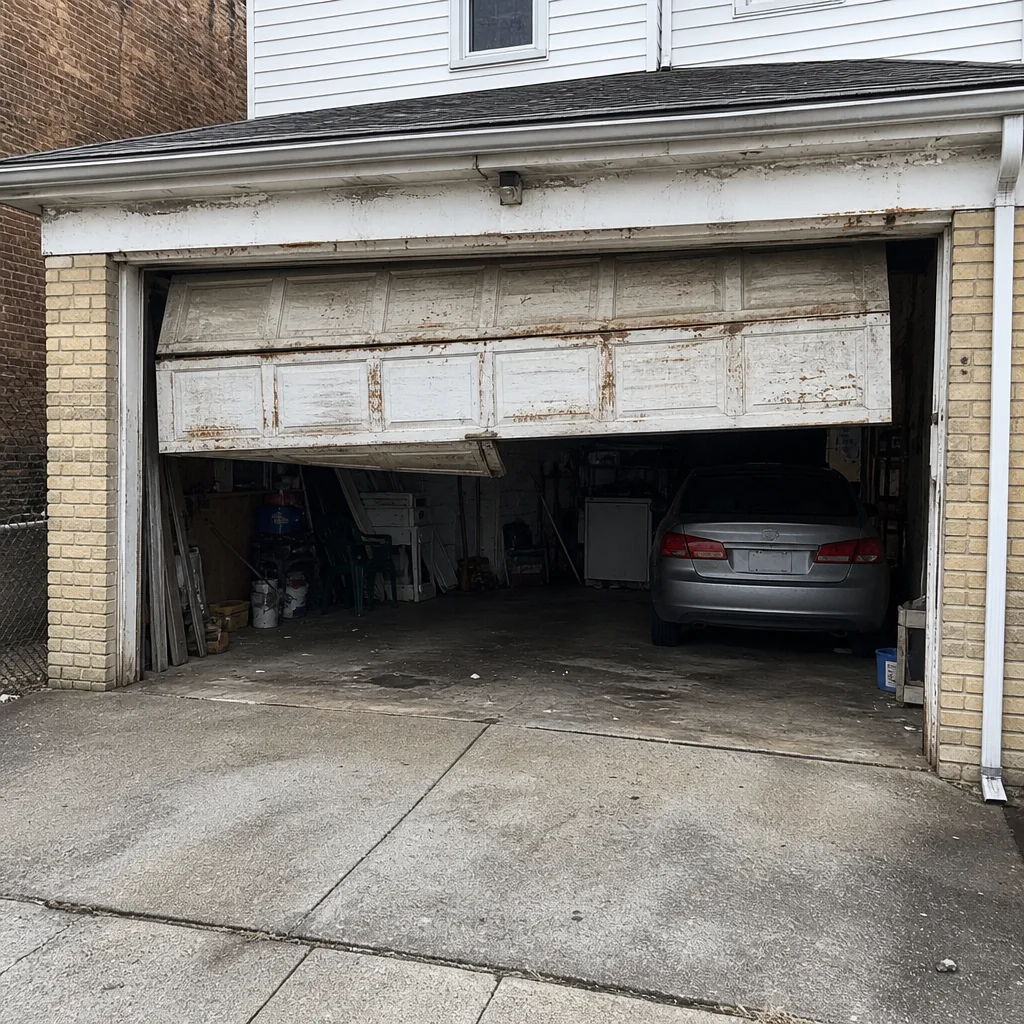 Before
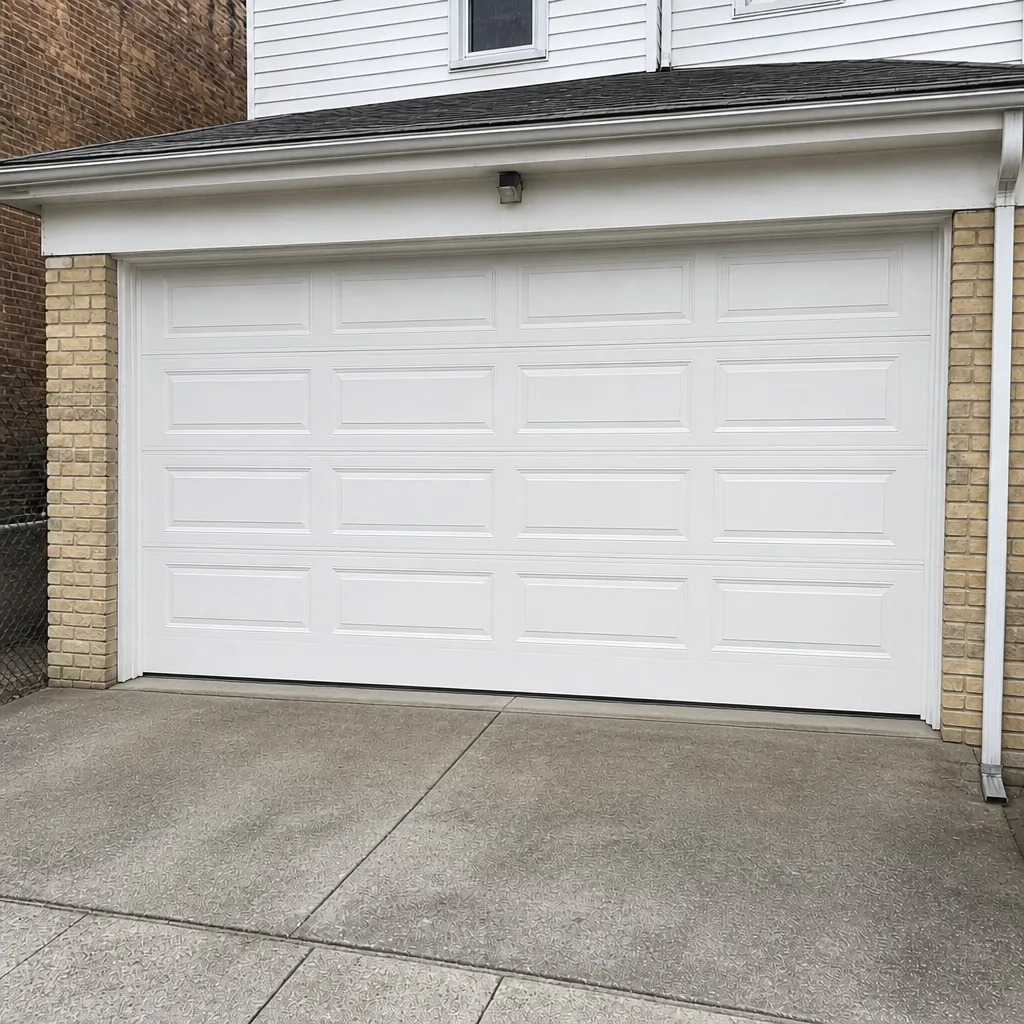 After
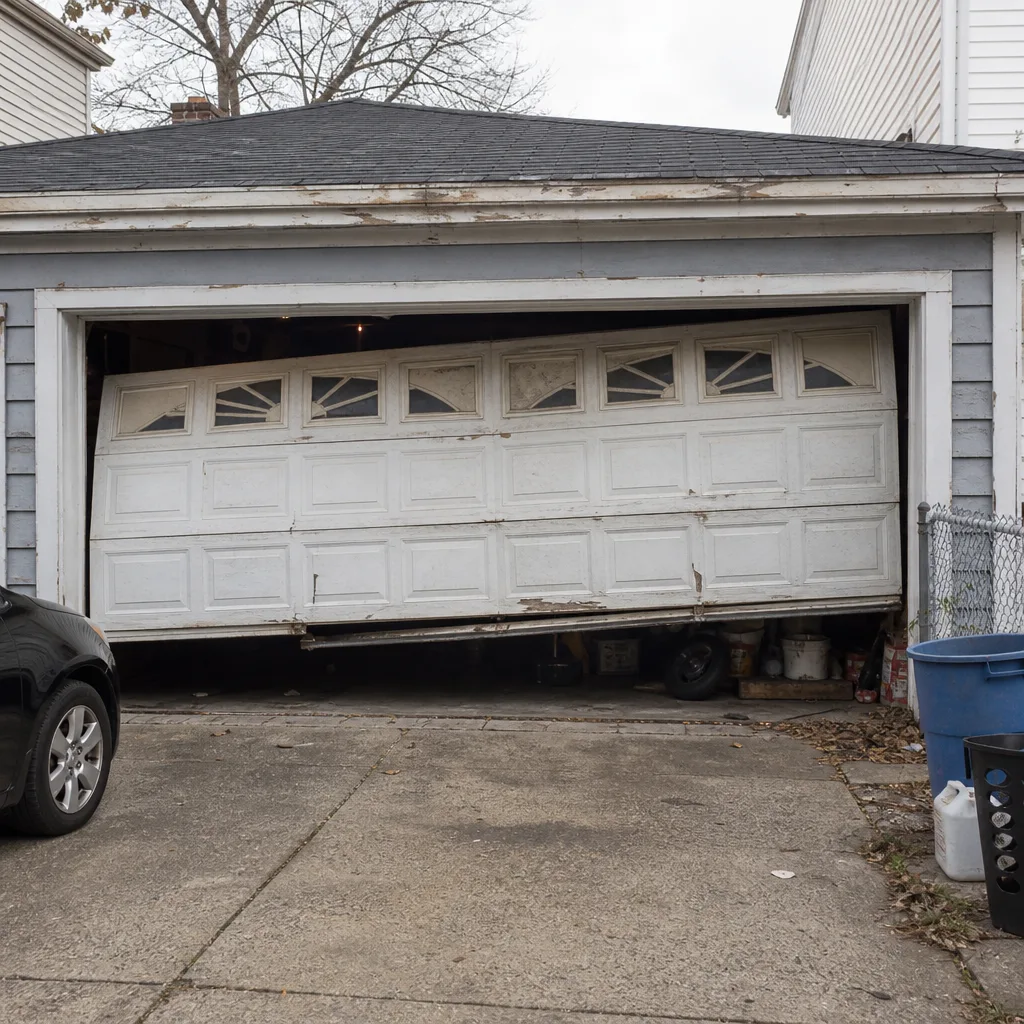 Before
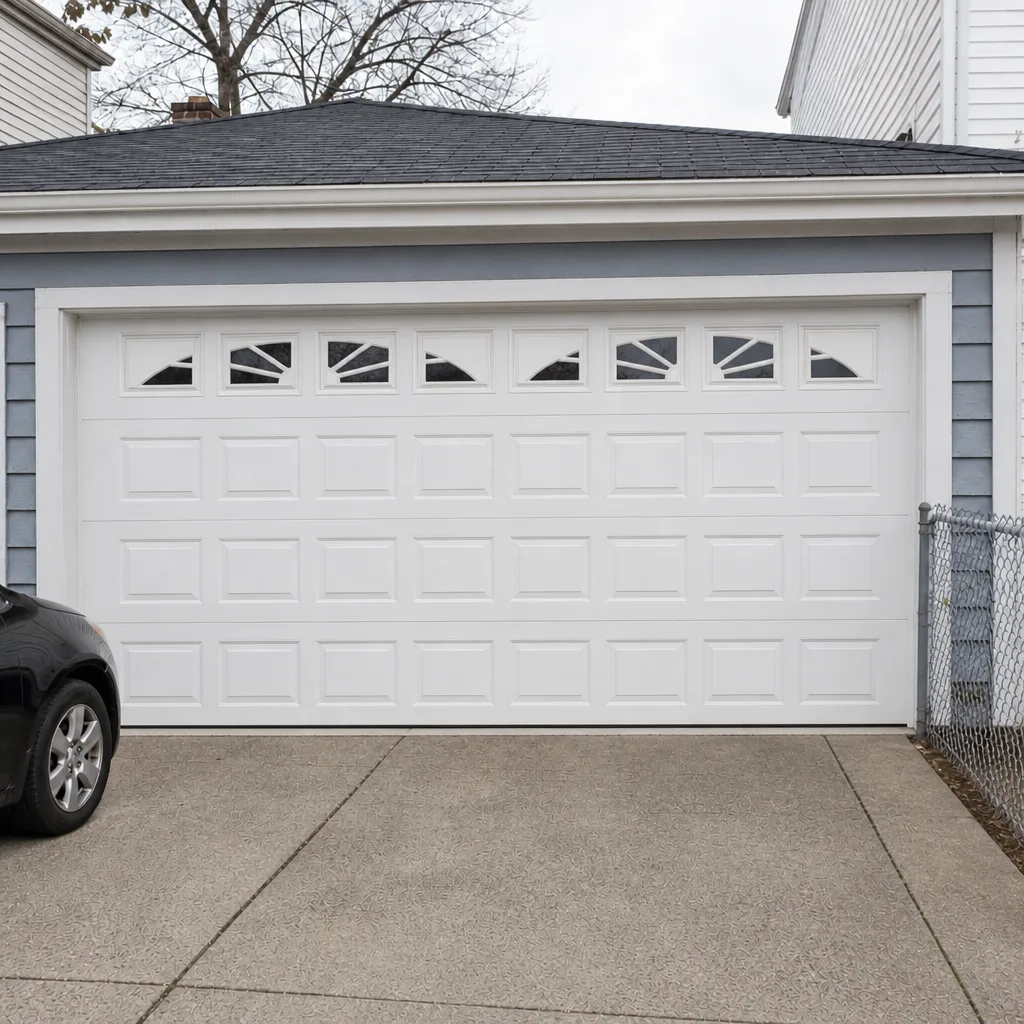 After
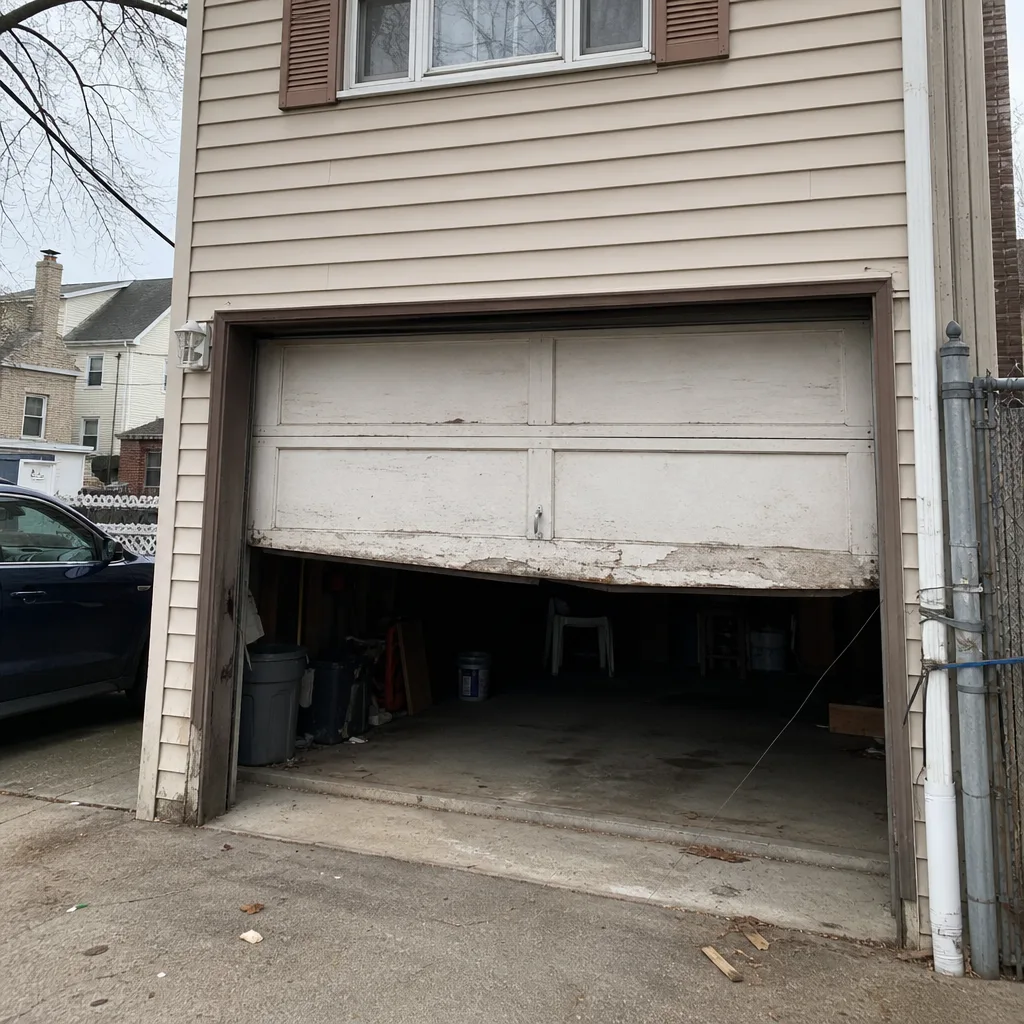 Before
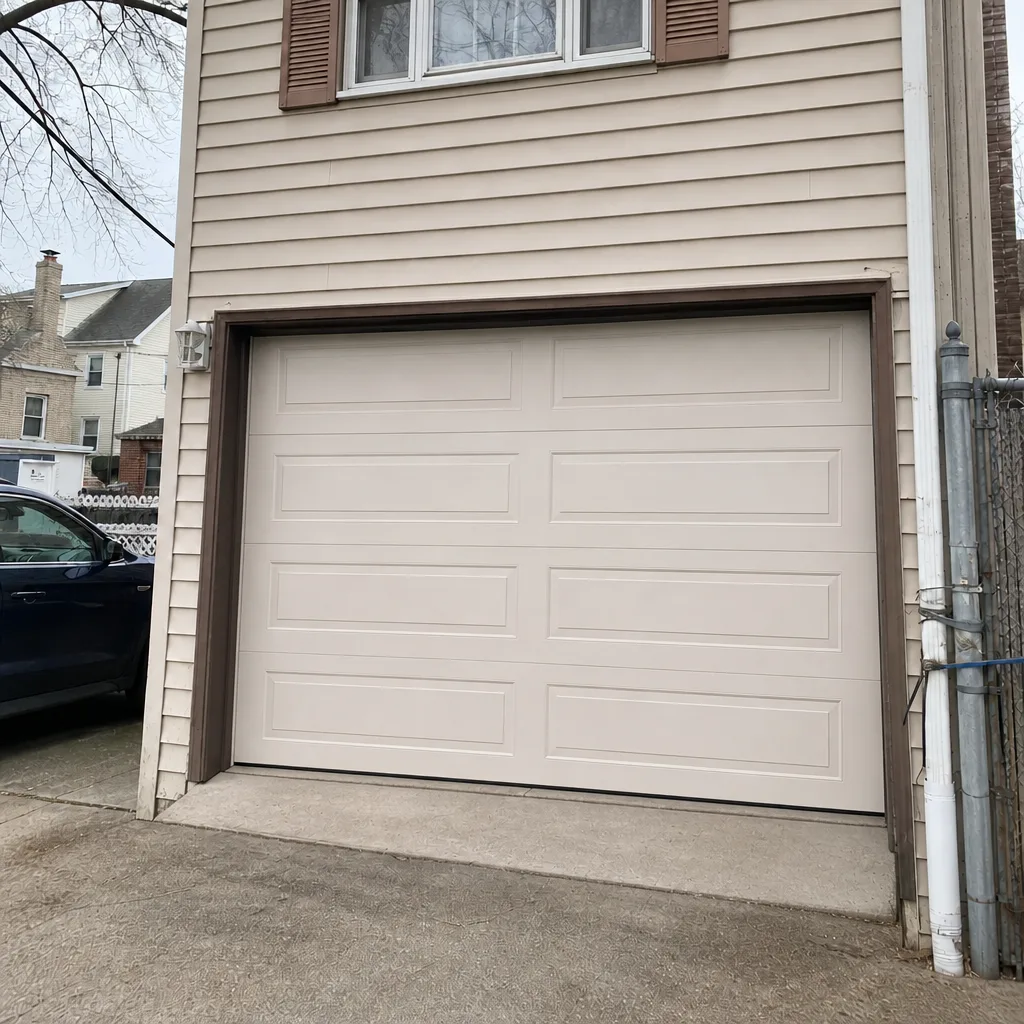 After
When to Call a Professional
Call a professional the moment any of these is true: the door has stopped running level, a spring shows a rust stripe or a visible gap in its coils, a cable shows fray or kink, the opener has reversed without an obstruction more than once, or you can see daylight under a closed door that didn’t have a gap last month. Call today rather than tomorrow if the door has started running unevenly – unevenness is the fastest-moving symptom we see. For anything involving springs or cables, don’t run the door at all. Garage Door Repair Ironbound offers free estimates in Ironbound – call (855) 337-1035. We’ll diagnose what’s actually happening before we quote a repair, and the price you agree to is the one you’ll see on the invoice.
Frequently Asked Questions
The most serious signs are a crooked or uneven close, a visible rust stripe on a torsion spring, a frayed or kinked lift cable, and an opener that reverses without obstruction after the sensors have been cleaned and aligned. Rust on springs or cable damage means stop using the door and call a technician. For anything else, booking a diagnostic within days is the right move.
Spring repair in Ironbound is priced by the job once we’ve diagnosed the door, and the range depends on spring type, door weight, and whether the spring is a single or a matched pair. We won’t quote a range here that won’t hold – the exact number comes on the written estimate after we’ve seen the door, and the price you agree to is the one you’ll see on the invoice. Call (855) 337-1035 for a free estimate.
Yes – a door that won’t close is exactly what our emergency garage door service exists for. Call (855) 337-1035 and we’ll get you on the schedule as fast as we can, with a quoted price before any work starts.
No. We quote before work starts, based on what we find during the diagnostic. If the diagnosis turns up something else – say, a bent track alongside a spring issue – we’ll tell you before we touch anything, and you can approve the additional work or hold it for a later visit. There are no surprise charges.
Yes. The local professional we connect you with is licensed and insured as their state requires. Our technicians have up to 9 years of experience diagnosing and repairing garage doors, openers, and spring systems across the major brands.
We’re certified to service eight leading garage door and opener brands: LiftMaster, Chamberlain, Genie, Clopay, Amarr, Wayne Dalton, Craftsman, and Raynor. That covers both legacy openers and smart-home-compatible systems, and both steel and wood door types. When you call with a brand and model, we can usually bring the right part on the first visit.
Once a year for a full tune-up – tighten hardware, lubricate rollers and hinges, check spring and cable integrity, and verify sensor alignment. Between professional visits, run the door once a month and listen for anything new. If you hear something new, that’s the signal to book a diagnostic rather than wait.
No. A warning sign is a mechanical symptom – it reflects a change in a spring, cable, roller, track, or sensor. The door may run fine for a while after the sign appears, but the underlying change doesn’t reverse. Left alone, it gets worse. That’s why the two-to-six-week window before failure is the cheapest window to fix it.
The Bottom Line
Most garage door failures start showing signs weeks before they happen. Uneven closing speed points you at cable or spring balance. Grinding, squeaking, and rattling each mean something different about urgency. Reversing openers should be treated as a sensor problem first and a spring problem second. Gap patterns under the closed door map to tracking, alignment, or slab settling. Rust on painted panels is cosmetic; rust on springs and cables is not. If you can read the door, you catch the problem while it’s still a small repair. If you can’t, call – our team reads doors for a living. For more on what a full garage door installation looks like when a door does need replacing, or to book a free estimate, call (855) 337-1035. And if you’d like a broader look at the services we cover in Ironbound, our Garage Door Repair Ironbound page lays out the full lifecycle of what we handle – repair, opener service, spring work, installation, and emergency response. For a full-door replacement quote, garage door installation is where to start.
Written by the team at Garage Door Repair Ironbound.