Last updated November 21, 2026
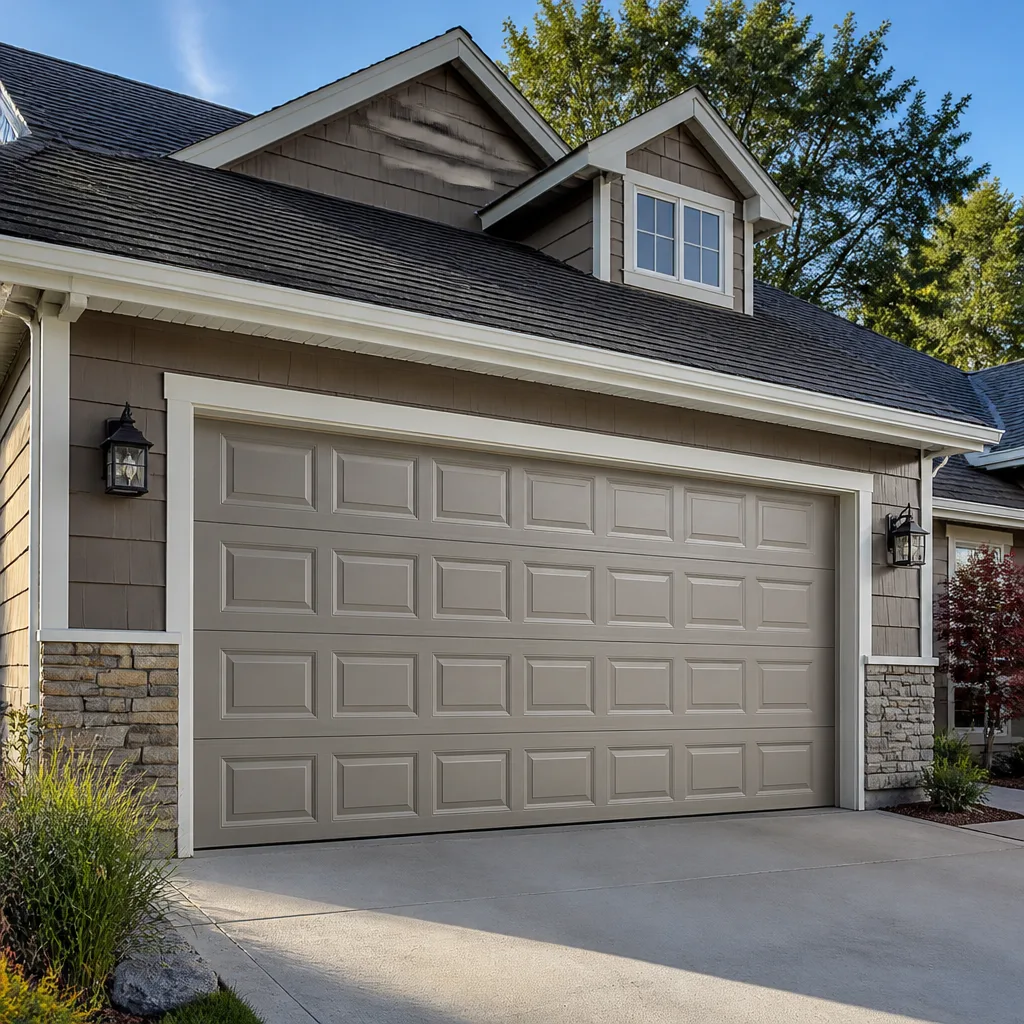 Raised-panel steel
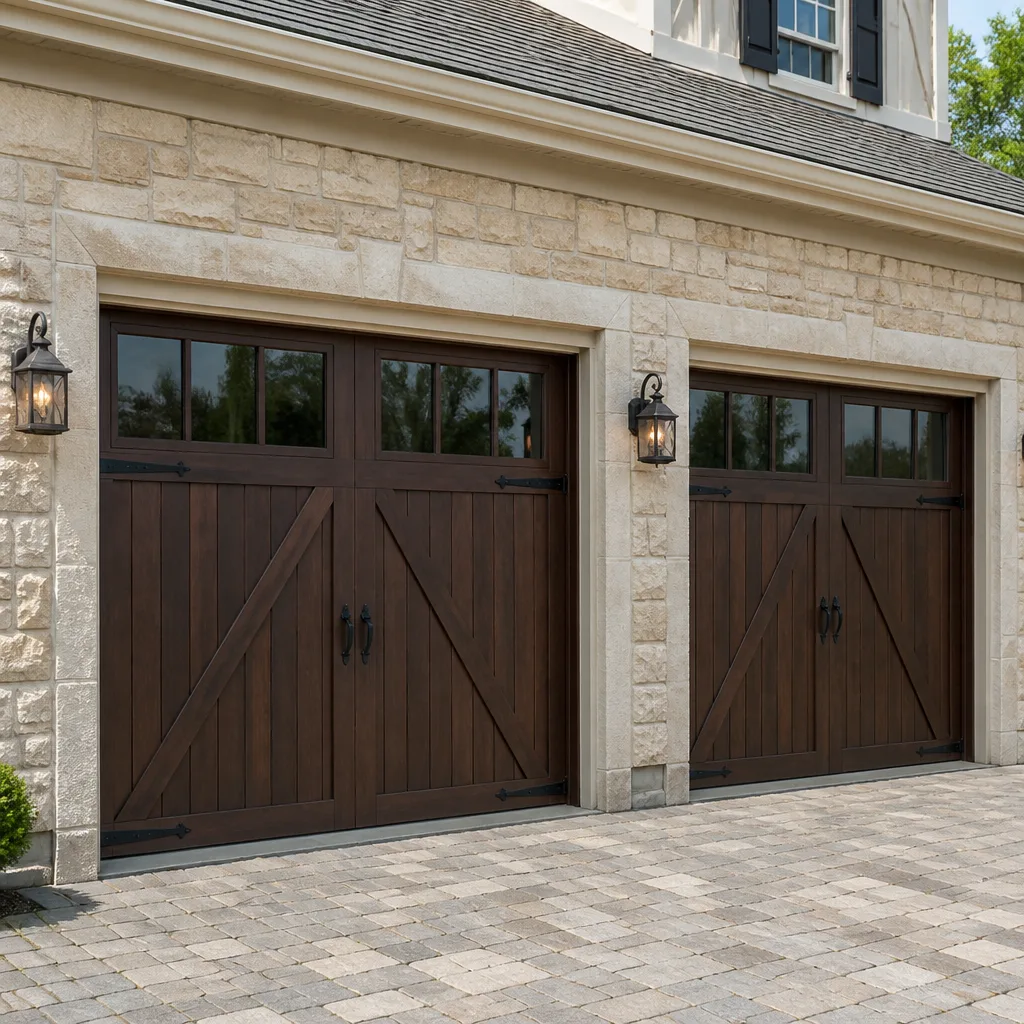 Carriage house
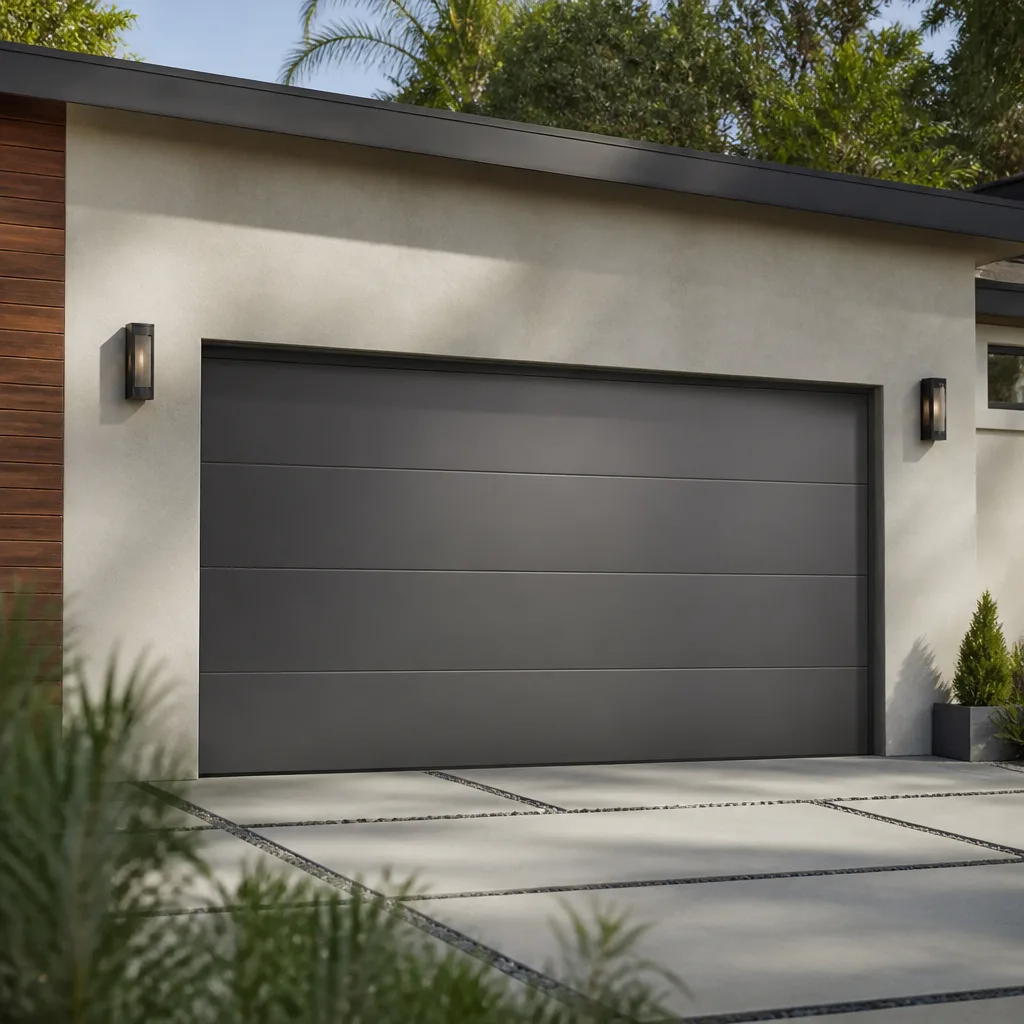 Modern flush
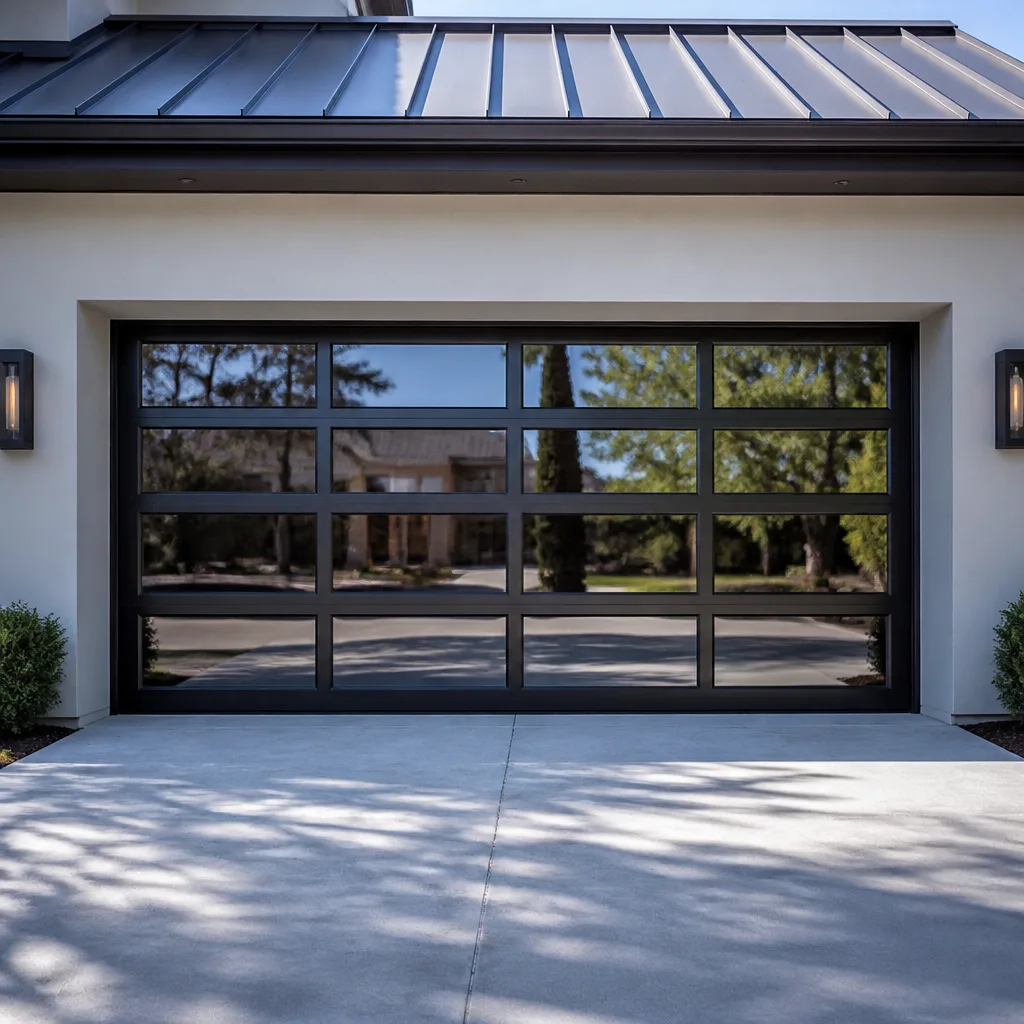 Full-view glass
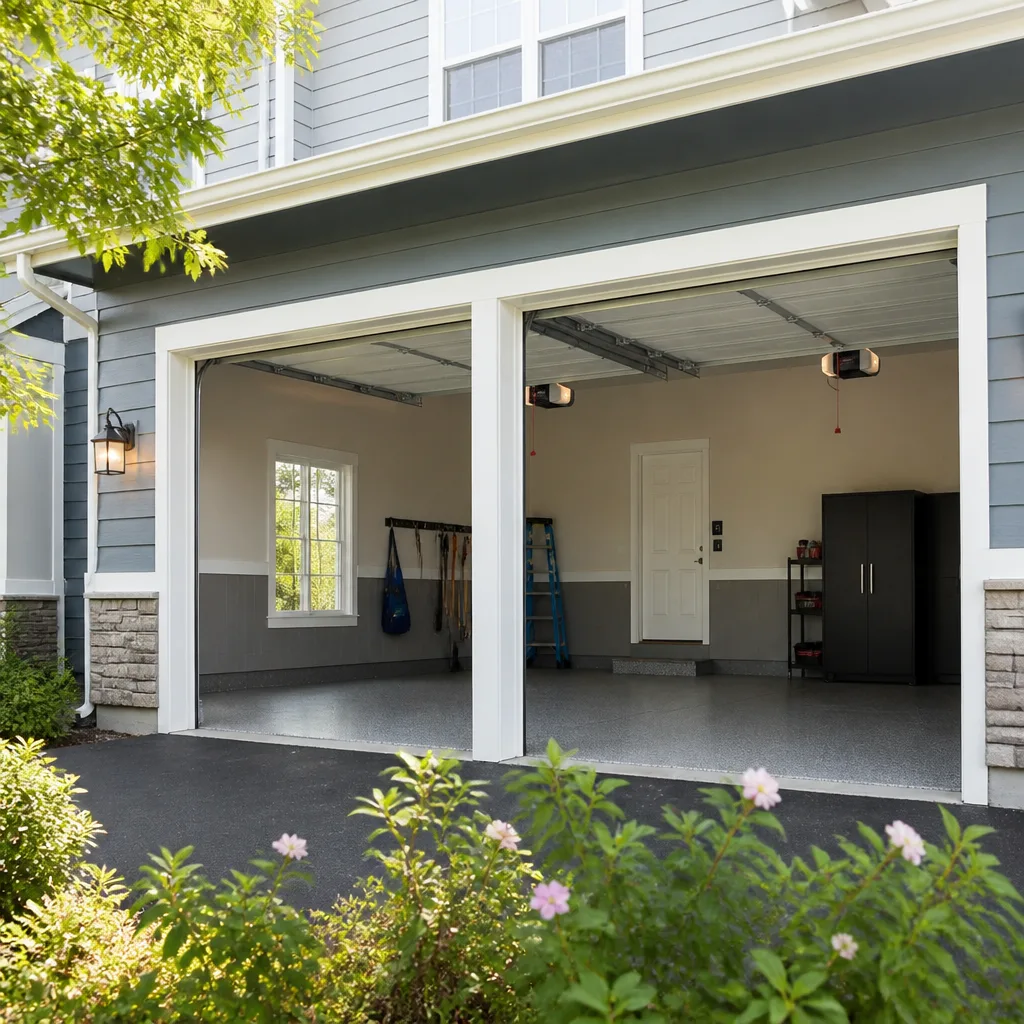 LiftMaster openers
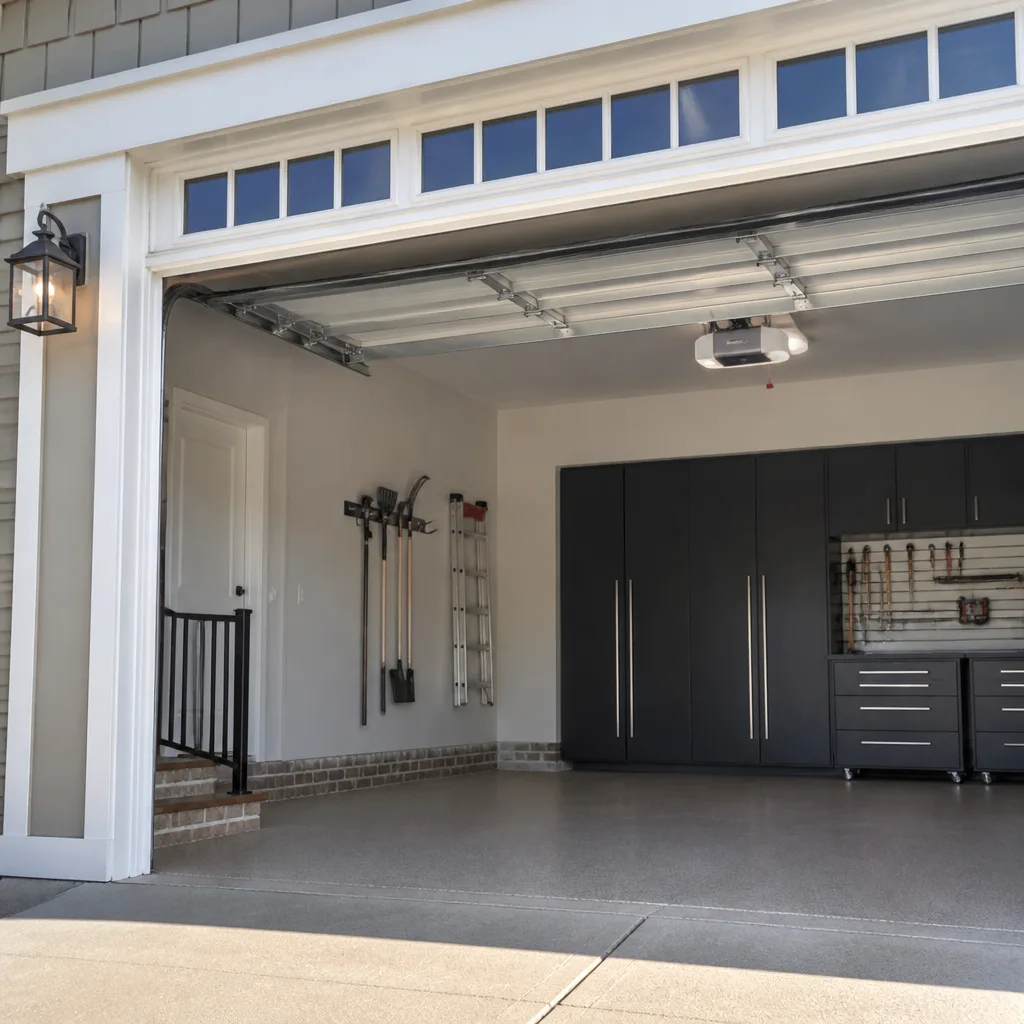 Chamberlain openers
Full 25-point door and opener safety check with every visit - springs, cables, rollers, tracks, and your LiftMaster or Chamberlain opener included
You get a price before we start. It does not change when the pro arrives.
Get your free estimateGarage Door Emergency Preparedness Guide for Ironbound Homes
Most garage door emergencies we hear about don’t happen at a convenient hour. They happen after dark, on the coldest night of a January cold snap, or the moment the power drops in a storm and the opener goes silent. The counterintuitive part is that a door failing is often not the emergency. The emergency is what a homeowner does in the next ten minutes – pulling the release cord on a door with a broken spring, forcing a jammed opener, or propping a heavy door open with whatever’s nearby. This guide walks Ironbound homeowners through the real scenarios that generate emergency calls and gives you a decision tree for each, so you know whether you need a technician in half an hour or can safely wait until morning. We’ll cover manual release, power outages, snapped springs, frozen doors, and the exact information to have ready when you call.
Quick Answer
If your garage door won’t open during a power outage, the manual release cord is designed to work, but only pull it when the door is fully closed and you’re certain the spring system is intact – on a door with a broken spring, releasing the trolley can let a heavy door drop on whatever is underneath. A snapped spring means stop using the opener immediately, not wait until morning, because every cycle grinds the remaining parts and can bend the door or damage the opener. And a door that just feels “stuck” at 6am in January is more often frozen than broken. Knowing which of these three situations you’re in is the whole game.
Styles & brands we work with
- Raised-panel steel
- Carriage house
- Modern flush
- Full-view glass
- LiftMaster openers
- Chamberlain openers
Table of Contents
- Manual Release Cord: How to Use It and When Not To
- Power Outage Protocol for Ironbound Homes
- Snapped Spring: Why You Stop Using the Opener Immediately
- Frozen Door vs. Broken Door: Telling the Difference at 6am
- What to Have Ready When You Call for Emergency Service
- The Decision Tree: Wait Until Morning or Call Now
- Opener Failures: Power, Logic Board, or Something Else
- Preventive Steps for Ironbound Doors Before Winter
Manual Release Cord: How to Use It and When Not To
The manual release cord hangs from the trolley that connects your opener to the door. Its job is to disconnect the door from the opener so you can lift it by hand. On a healthy door this is straightforward. On a door with a compromised spring system, it’s the single most dangerous thing a homeowner can pull. That’s the scenario this whole section exists to prevent.
A torsion or extension spring carries the weight of the door. The opener only does a small fraction of the lifting work. When a spring is intact, the door is balanced and light to lift by hand. When a spring has snapped, the door’s full weight – often hundreds of pounds – is suddenly carried by the opener, the cables, and whatever the release cord is holding back. Pull that cord and the door can come down fast.
Before you pull the release cord, check these things:
- Is the door fully closed? Never pull the release with the door open or partly open. If it’s up there and you disconnect it, you have nothing holding it.
- Look at the spring above the door – torsion springs run along a shaft, extension springs run alongside the tracks. Is any coil visibly separated, hanging, or snapped clean through? If yes, do not pull the cord.
- Is the bottom of the door clear? Make sure no one – child, pet, adult – is standing under the door or in its path.
- Is the door visibly crooked or off-track? A tilted door means a cable or roller issue. Disconnecting it can shift the weight onto one side.
If the door is fully closed, the spring looks intact, and the bottom is clear, you can pull the release cord with the opener disengaged and lift the door manually. If the door feels suddenly heavy, put it back down. Heavy means the spring isn’t doing its job, and that’s when a technician needs to be on the way, not a homeowner experimenting. If you’re in Ironbound and you’re not sure what you’re looking at, that’s the moment to call and describe what you see before touching anything. Our garage door repair team talks homeowners through this every winter, and calling first is always cheaper than a bent door or a smashed car.
Power Outage Protocol for Ironbound Homes
Power outages are the most common cause of “my garage door won’t open” calls we take in Ironbound, and they come with a hidden variable: whether your opener has a battery backup. Since 2019, most new openers sold in the U.S. are required to include battery backup capability, but plenty of homes still have older openers without it, and plenty of newer ones have a backup battery that’s dead because nobody has checked it in years. What you do during an outage depends on which one you have.
First, confirm the outage. Check whether lights elsewhere in the house are on and whether a circuit breaker tripped. It’s more common than people expect for a single garage circuit to trip while the rest of the house stays powered. If the breaker resets and the opener stays dead, you’re dealing with an opener problem, not a power problem, and that’s an garage door opener repair call.
If it’s a real outage, here’s how to think about manual operation by door type:
- Single-car door, lighter panels. These are generally manageable by hand once the opener is disconnected, provided the spring is intact. Lift slowly and get help if you’re alone.
- Double-car door, insulated panels. These carry significantly more weight, and lifting one by hand can strain your back or shoulder if the door isn’t balanced. Disconnect, then test lift a few inches to see how heavy it feels before committing.
- Heavy wood or steel doors. These are where homeowners get hurt. If the door feels heavy even with the spring looking fine, put it down and wait for the opener to come back, or call for help.
- Battery-backed opener. Press the wall control or remote as usual. If nothing happens, the backup battery may be flat. Many LiftMaster and Chamberlain units show a battery indicator light on the motor head; a red or no light usually means replace the battery.
Once the door is open by hand, prop nothing under it that could shift. Never use a chair, a block of wood, or a broom handle to hold a heavy door up – if the door slips, it can crush whatever’s beneath. Get the car out if you need to, then close the door fully. If you’re in Ironbound and the power is out for an extended stretch, calling for an emergency assessment to confirm the door is safe to operate manually is a reasonable step before you leave the house for the night.
Snapped Spring: Why You Stop Using the Opener Immediately
A snapped spring is the most consequential garage door failure, and it’s the one where timing actually matters. The instinct when a spring breaks is to hit the opener again, thinking the door just hiccuped. That’s the exact move that turns a spring repair into a spring, cable, and door-panel repair. When the torsion spring on your door breaks, the opener suddenly carries the full weight of the door without the counterbalance it was designed for. Every cycle after that grinds the opener’s gear assembly, strains the cables, and can bow the door and pull it off track.
How to identify a snapped spring:
- Noise. A sharp crack or bang – often described as sounding like a gunshot or a car backfire – is the classic signature of a torsion spring failing.
- Visual. Look at the shaft above the door. Torsion springs are wound coils that should sit flush in a tight spiral. A snapped one shows a clean break with a gap between the coils.
- Extension springs. These run alongside the horizontal tracks. If one has snapped, it hangs loose or has stretched dramatically, and the door sags toward that side.
- Door behavior. The opener runs but the door barely moves, or the door lifts a few inches and stops. Even if it goes up, don’t let it come back down under opener power.
If you suspect a snapped spring, do not cycle the opener again, and do not try to lift the door by hand. Springs under tension are dangerous mechanical energy – a spring winding bar can slip and strike a hand or face, and untrained DIY spring work is one of the leading causes of serious garage door injuries. Stop using the door, disconnect the opener if it’s already running, and call for service. We handle spring repair as a dedicated service because it’s the most mechanically hazardous job on a garage door, and it’s not the job to learn from a video at 11pm.
This is where speed matters for Ironbound homeowners. If the door is stuck open at night, in a neighborhood, and there’s a car trapped or the house isn’t secure, the correct move is to call for emergency service rather than leave it and hope for morning. If the door is closed and secure, it can wait until morning – but it should not wait until next week. Getting a spring repair scheduled promptly prevents the follow-on damage that turns a straightforward spring job into a larger one.
Frozen Door vs. Broken Door: Telling the Difference at 6am
January in Ironbound means a lot of 6am calls that turn out to be frozen seals, not broken springs. A frozen door and a broken door feel similar from inside the house: the opener runs, the door doesn’t move, and something is clearly wrong. The difference is what you do next, and getting it wrong can tear a bottom seal or strip an opener gear.
Here’s how to tell them apart before you call anyone:
- Check the weather context. Did it rain, sleet, or snow the night before, then drop below freezing? If so, ice between the bottom seal and the driveway is a strong candidate.
- Listen to the opener. If it runs normally with the usual hum, the opener is likely fine and something is physically binding the door. If it clicks or hums without moving, the opener is being safety-stopped or is failing.
- Inspect the bottom seal. Run your hand along the bottom rubber and the concrete below. A visible ice ridge or a seal frozen to the slab points to a frozen door.
- Check the safety sensors. The two small eyes near the bottom of the tracks need to be aligned and clear. A chunk of ice or snow in front of one will stop the door before it ever moves.
- Try the manual release, spring permitting. If the spring is intact and the door is closed, disconnect the opener and gently push up by hand. A frozen door usually breaks free with steady pressure. A broken door stays exactly where it is and feels heavy.
If it’s frozen, don’t pour hot water on the seal. It refreezes into a thicker ice patch. Don’t force the door with the opener repeatedly – that’s how gears get stripped and limit switches get knocked out of adjustment. A safer approach is to clear ice from the bottom seal with a plastic scraper and give the door a gentle hand lift with the opener disengaged. If it doesn’t release within a couple of minutes, the seal may be frozen to the concrete along its full length and a technician with the right tools gets it free without tearing it.
If the door doesn’t free up, or if the spring looks damaged, treat it as an emergency. In Ironbound on a cold morning, waiting weeks for a freeze that doesn’t clear can cost more than scheduling a service call, and a door that’s partway stuck and forced by the opener is how panels get bent. Our technicians have up to 9 years of experience diagnosing exactly this kind of jam.
What to Have Ready When You Call for Emergency Service
The single biggest factor in how fast an emergency garage door call gets resolved is the information you have ready when you call. A technician who knows your door brand, opener brand, and symptom before arriving shows up with the right parts and diagnoses on the spot. A call that starts at “my garage is broken” and takes ten minutes to sort out the brand slows the whole process. Here’s what to have on hand.
Before you dial, gather:
- Manufacturer and model of the door. A sticker on the inside of the door or on the frame usually lists it. Brand matters: Clopay doors have different panel and spring specs than Amarr or Wayne Dalton.
- Manufacturer and model of the opener. Check the motor head or the wall control. A quick photo of the model sticker saves time.
- The exact symptom. “Opener runs but door doesn’t move,” “door goes up a foot and stops,” “opener clicks but nothing moves,” “door goes up but won’t come down” – each points to a different failure.
- Whether you’ve already used the manual release cord. If you have, mention it. The technician needs to know the trolley is disconnected before arriving.
- Whether the door is open or closed right now. Closed and secure is a lower-urgency call. Stuck open on a street-facing garage in Ironbound at night is not.
- What you can see of the spring. Coils intact, coils separated, or spring hanging loose.
- Address and access notes. Parking, alley access, or driveway constraints in Ironbound matter – some properties are easier to reach from one street than another.
If your opener is a LiftMaster or Chamberlain with a wall console, have a photo of what the console is showing. If it’s a Genie or Chamberlain unit with a smart-home app, note whether the app shows a fault code. That info often tells us whether you’re looking at an emergency service call or an opener repair that can be scheduled the next morning. Either way, having it ready means the technician arrives with the right parts, not a truckful of guesses.
The Decision Tree: Wait Until Morning or Call Now
This is the part most homeowners get backwards. The urgency of a garage door problem depends on three things: whether the door is secure, whether the door is safe to leave alone, and whether the spring has failed. Run through these questions in order.
Is the door currently open and can’t be closed? Call now. An open door on a street-facing garage is a security problem, and if the door is stuck open because a spring snapped or a cable let go, forcing it closed isn’t safe either. That’s a legitimate emergency call in Ironbound and worth scheduling promptly.
Is the door closed and secure, and does the spring look intact? You can generally wait until morning. A dead opener, a remote that won’t work, a safety sensor that’s out of alignment, a door that’s slow – none of those risk injury or damage if the door isn’t being cycled. Schedule the repair for the next available appointment.
Is the spring visibly snapped or the door hanging off track? Call now even if the door is closed. A snapped spring is a stop-using-the-opener scenario, and every day it sits there is a day the door’s weight is on parts that weren’t designed to hold it. If someone tries to use the door in the meantime, the risk of damage goes up fast.
Is the door a heavy wood or steel door and feels unbalanced? Call now. Unbalanced doors on heavy panels are where injuries happen, and a door that closes on a car or a person is much worse than a scheduled repair.
Is the door partway open and feels jammed? Call now. A door stuck mid-travel can be a cable off the drum or a roller out of the track, and both can go from bad to dangerous if forced.
If you’re between categories and not sure, call and describe the situation. A quick phone assessment is free, and being told “that can wait until morning” is worth the call. Being told “don’t touch it, we’ll be there” is worth more.
Opener Failures: Power, Logic Board, or Something Else
Not every opener failure is a dead opener. In our experience across LiftMaster, Chamberlain, Genie, Craftsman and the other major brands we service, opener problems sort into a small number of categories, and the brand often hints at which one you’re looking at.
- No response at all from the opener. Check the breaker and the outlet the opener is plugged into first. If both are fine, check the battery in the remote, then check the wall console. Wall console failure is common and cheap to fix.
- Opener runs but door doesn’t move. Either the manual release is engaged, or the trolley is stripped, or something is binding the door physically. This is a door-side problem more often than an opener problem.
- Door reverses immediately or stops before closing. Safety sensor or limit switch issue. Check the sensors first – they’re the small eyes on the tracks. If they’re aligned and clean and the door still reverses, it’s a limit or force setting issue.
- Opener runs, door goes up but won’t come down. Classic sensor issue, or a jammed track on the down side. Do not keep cycling – a door that stops partway is a “call a technician” situation, not a “keep pressing the button” one.
- Smart-home opener won’t connect to the app. LiftMaster, Chamberlain and Genie all have connected models with different pairing procedures, and a Wi-Fi issue is never an emergency. Book a regular garage door opener repair visit and get it sorted properly.
- Opener makes grinding noise and the door barely moves. Gear or sprocket wear inside the unit. Continued cycling turns a gear replacement into a full opener replacement, so stop using it once the noise starts.
The key point for emergency planning: most opener failures aren’t emergencies. Most spring failures are. Getting that distinction right is what saves you a panic call at midnight when you didn’t need one – and gets you help at midnight when you did.
Preventive Steps for Ironbound Doors Before Winter
An hour of prep in the fall prevents most of the winter emergency calls we take in Ironbound. Cold weather is unkind to garage doors: metal contracts, lubricant thickens, seals freeze, and the springs carry more stress from the extra cycles in bad weather. A little attention in October goes a long way in January.
- Test the door balance. Disconnect the opener with the door fully closed, then lift the door by hand halfway and let go. A balanced door stays roughly where you put it. A door that falls means the springs are weakening and need service before they fail.
- Lubricate moving parts. Hinges, rollers, and the spring shaft need a proper garage door lubricant, not WD-40. This is the single easiest thing a homeowner can do to extend the life of the hardware.
- Check the bottom seal. A worn or torn seal lets water freeze under the door and glues it to the concrete. Replacing a seal is cheap; forcing a frozen door is not.
- Test the safety sensors. Make sure both eyes are aligned and nothing is in front of them. Sensors fail more often in cold weather.
- Check the battery backup on the opener. If you have a newer LiftMaster or Chamberlain with a backup battery, test it yearly by unplugging the opener and cycling the door. A dead backup battery is the thing that turns a power outage into a real problem.
- Look at the springs. If you see any signs of rust, stretching, or uneven coils, get them inspected before the cold snap. Spring failure is easier to prevent than to respond to.
- Book a service check if the door is older. A scheduled tune-up catches stretched cables, worn rollers, and springs near the end of their life – all things that could fail on the coldest night of the year.
If you’re not comfortable doing these checks yourself, that’s normal and expected. Most of the work here needs a trained eye to interpret, and a garage door spring is not the component to learn on. Scheduling a preventive visit well before the first freeze is the easy version of the emergency call you’d otherwise make in February.
Common Mistakes to Avoid
- Pulling the release cord on a suspected broken spring. The single most dangerous mistake in a garage door emergency. If any spring looks snapped, do not pull the release cord – the door can drop.
- Repeatedly pressing the opener after a spring snap. Every cycle grinds the opener and can bend the door. Once you hear the bang, stop using the opener until it’s serviced.
- Forcing a frozen door with the opener. A frozen bottom seal plus a forced opener equals a torn seal, a stripped gear, or a knocked-out limit switch. Clear ice or call for help instead.
- Pouring hot water on a frozen seal. It refreezes into a thicker ice ridge and can crack the concrete at the door’s base. Use a plastic scraper, or wait for a technician.
- Propping a heavy door with a chair or broom. If the door slips, whatever is beneath it is crushed. If you can’t hold it safely, don’t go under it, and get help before you move the car.
- Waiting until morning on a stuck-open door. An open door on an Ironbound street overnight is a security problem. If the door won’t close and the house isn’t secure, call for emergency service.
- Calling without the model info. Walking out to the garage to snap a photo of the door and opener model stickers before you dial means the technician shows up with the right parts, not a second truck.
- Assuming a frozen door is broken and forcing it open. Many early-winter “broken door” calls turn out to be frozen seals. Checking the bottom seal costs nothing.
See the difference
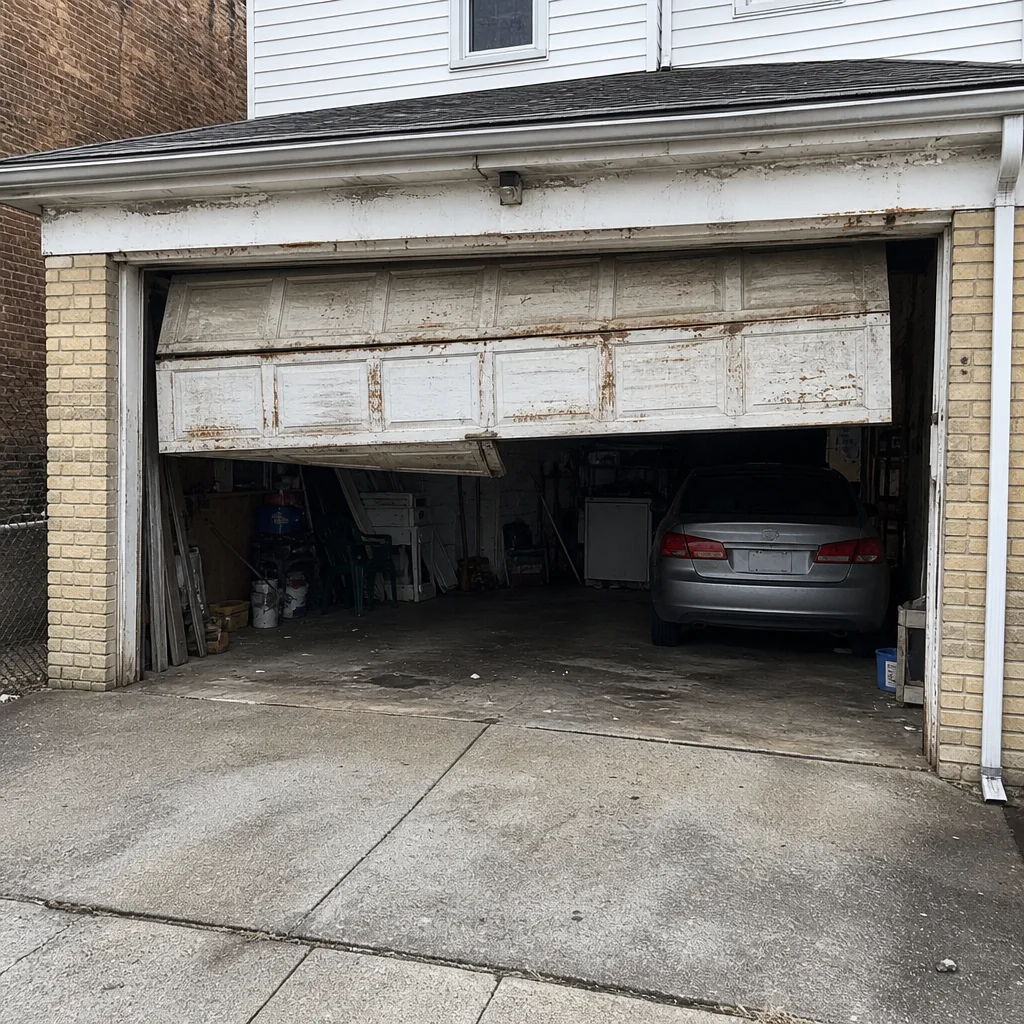 Before
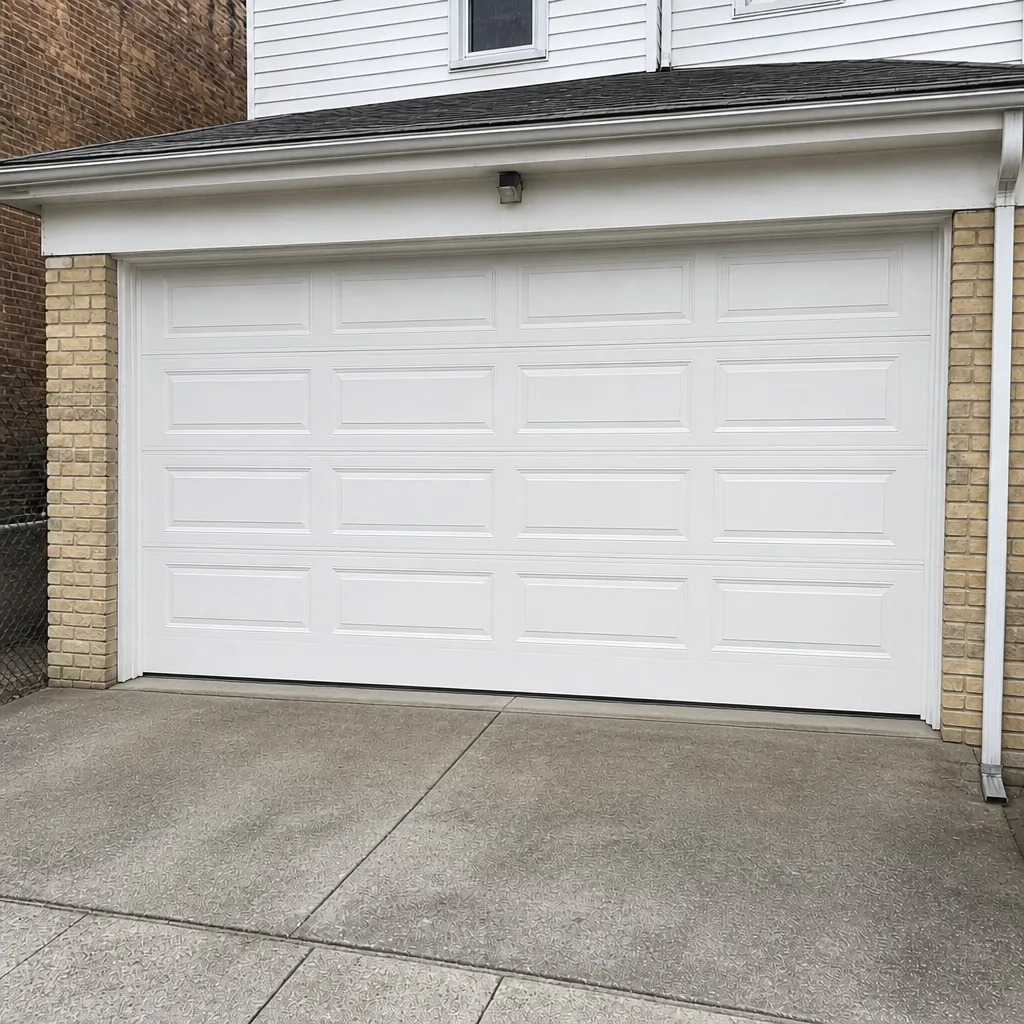 After
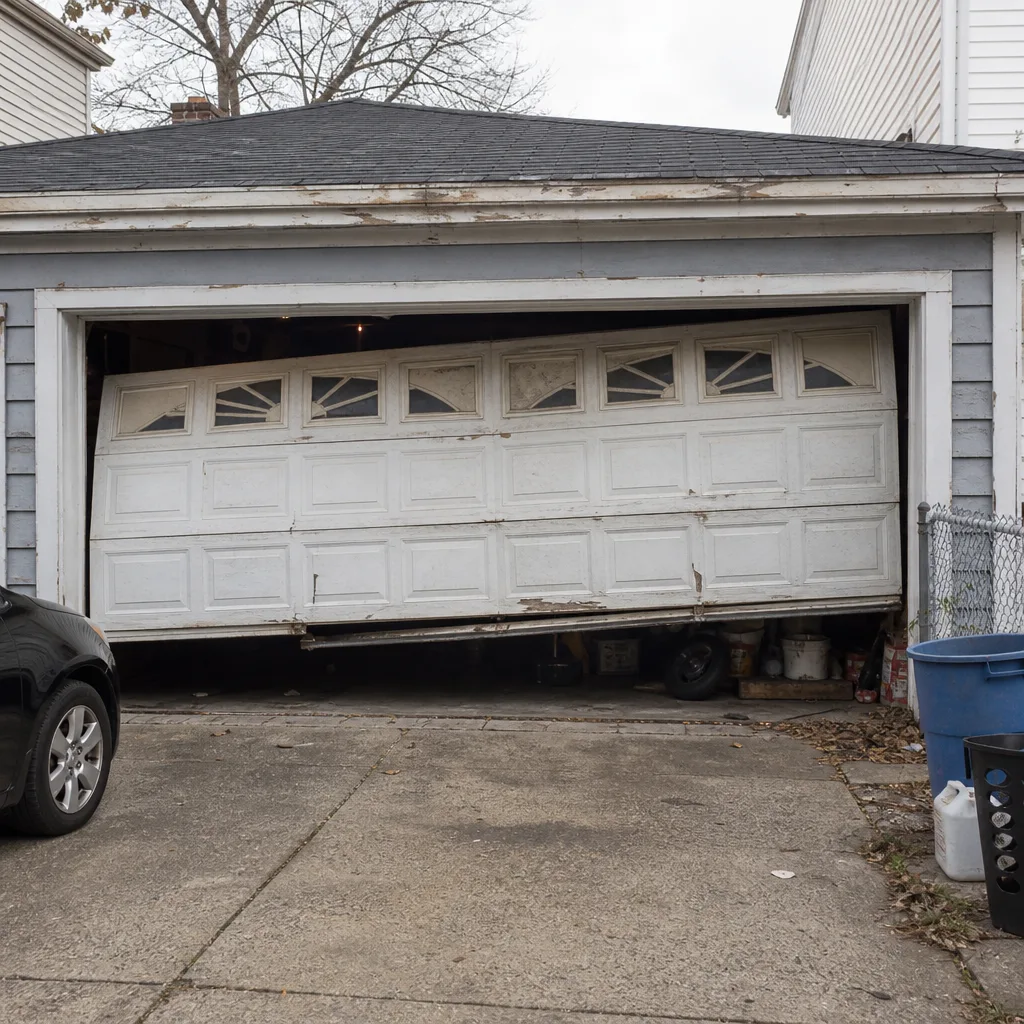 Before
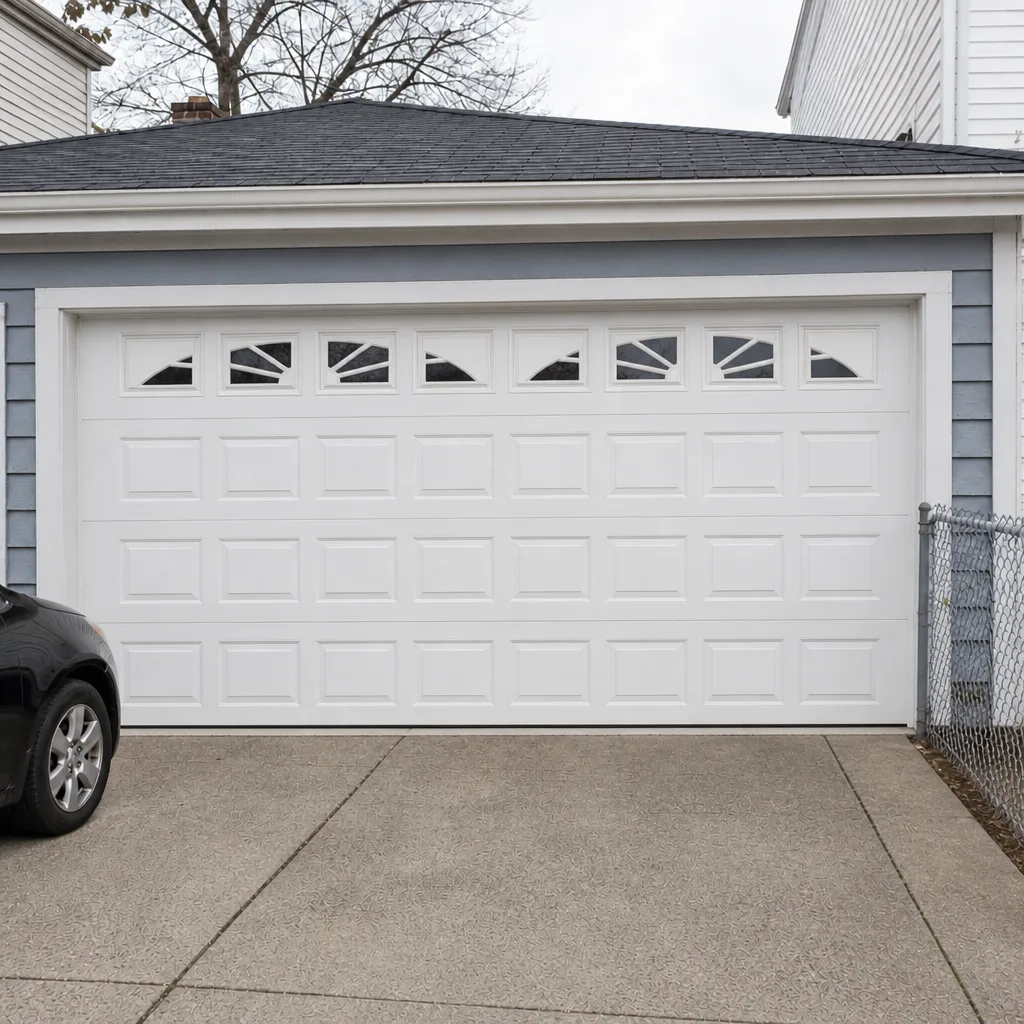 After
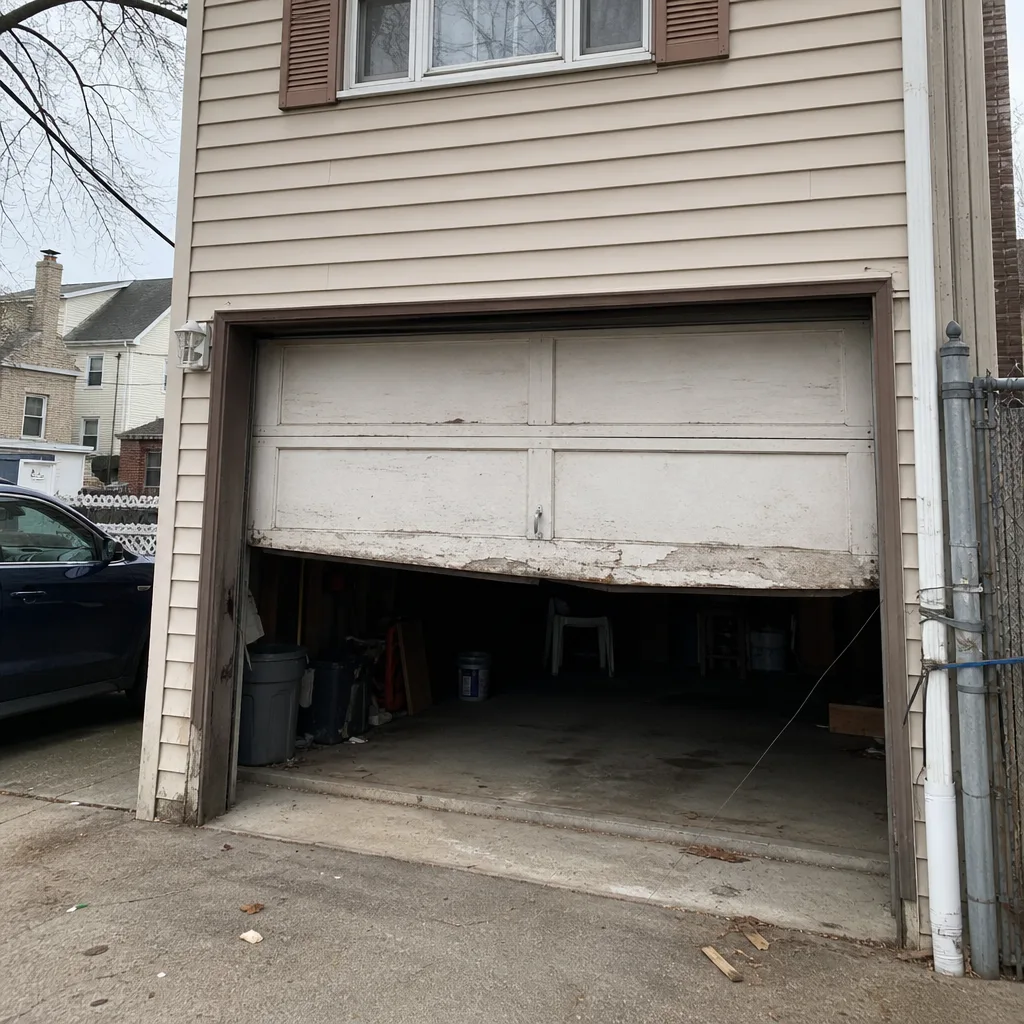 Before
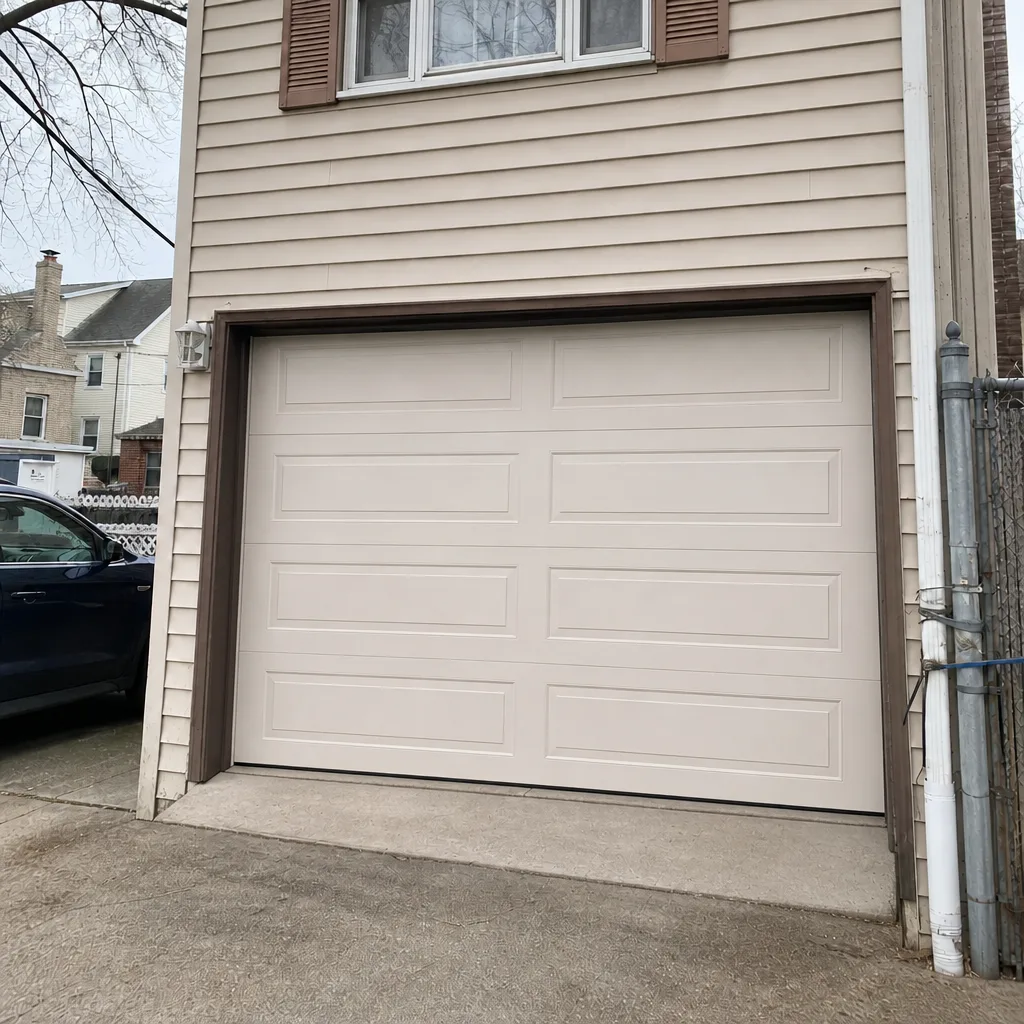 After
When to Call a Professional
Call a professional when the spring is visibly snapped, when the door is off-track or hanging, when the door is stuck open and the house isn’t secure, or when the door is heavy and unbalanced by hand. Those are the situations where waiting or forcing things makes the problem bigger. Call for a scheduled repair when the opener is dead, the sensors are misaligned, or the door is running rough but still moving safely. Garage Door Repair Ironbound offers free estimates in Ironbound – call (855) 337-1035. We work on LiftMaster, Chamberlain, Genie, and Clopay systems among the major brands, and our technicians have up to 9 years of experience diagnosing the exact failure mode before a wrench comes out. Whether you need a scheduled garage door installation quote or emergency service tonight, we can help you figure out which one you actually need.
Frequently Asked Questions
Yes, but only if the door is fully closed, no one is underneath, and the spring system looks intact. If you see any sign of a snapped spring, do not pull the release cord – a heavy door can drop. If the spring looks fine and the door is closed, pull the cord with the opener disconnected, lift the door by hand slowly, and put it back down if it feels heavy. Call (855) 337-1035 for a free estimate if you’re unsure what you’re seeing.
Spring repair pricing depends on whether the door has one spring or a matched pair, the door weight, and the spring size – a written estimate before any work starts is the only reliable way to know your actual cost. Springs are the most hazardous part of a garage door, so this isn’t the repair to price-shop without confirming the technician handles spring work as a standard service. Call (855) 337-1035 for a free estimate on your specific door.
A loud bang followed by a door that won’t open almost always means a torsion spring snapped. Stop using the opener immediately, check for a visible break in the spring above the door, and call for service. Continuing to use the opener after a spring snap grinds the gear assembly and can bend the door panels. Call (855) 337-1035 for emergency service.
No. Spring repair involves high-tension mechanical energy that can cause serious injury, and it’s not a job for a homeowner without the proper tools and training. Our technicians handle spring repair as a standard service precisely because it’s the most dangerous job on a garage door. Call (855) 337-1035 for a free estimate.
Cold weather can freeze the bottom seal to the concrete, or the limit switches can drift as metal contracts. Check whether the bottom seal is stuck to the driveway first – if it’s frozen, don’t force it with the opener. If the door reverses before touching the ground and the seal is clear, it’s likely a safety sensor or limit issue that needs a repair visit. Call (855) 337-1035 for a free estimate.
A frozen door won’t move after cold weather but feels like it could with steady pressure, while a broken door stays put and often feels heavy or hangs crooked. Check the bottom seal for ice, listen to whether the opener runs normally, and look at the spring above the door. If the spring is intact and the seal is frozen, clear the ice; if the spring looks damaged, treat it as a repair. Call (855) 337-1035 if you’re not sure.
The written estimate sets the final price – once you agree to it, that’s the number you pay. We quote and agree the price before any work starts, whether the call is routine or an emergency response. Call (855) 337-1035 for a free estimate.
The local professionals we connect you with are licensed and insured as their state requires, and our team has up to 9 years of experience. For a garage door spring or opener repair, ask for the written estimate and confirm the technician’s credentials before work begins. Call (855) 337-1035 for a free estimate.
The Bottom Line
Garage door emergencies in Ironbound follow a pattern: they happen at night, in the cold, and when the power is out. The best response is not to panic-call and not to wait until morning without thinking it through – it’s to know which category you’re in. A snapped spring means stop the opener and call now. A stuck-open door means call now. A frozen seal means clear ice carefully and try again. A dead opener with a closed, secure door means schedule for the next available appointment. Our technicians have up to 9 years of experience across LiftMaster, Chamberlain, Genie, and the other major brands, and we offer dedicated emergency service when the situation can’t wait. Call (855) 337-1035 for a free estimate, and if you’re mid-emergency, call us first – we’ll help you decide the safe next step before anything gets touched.
Written by the team at Garage Door Repair Ironbound.